
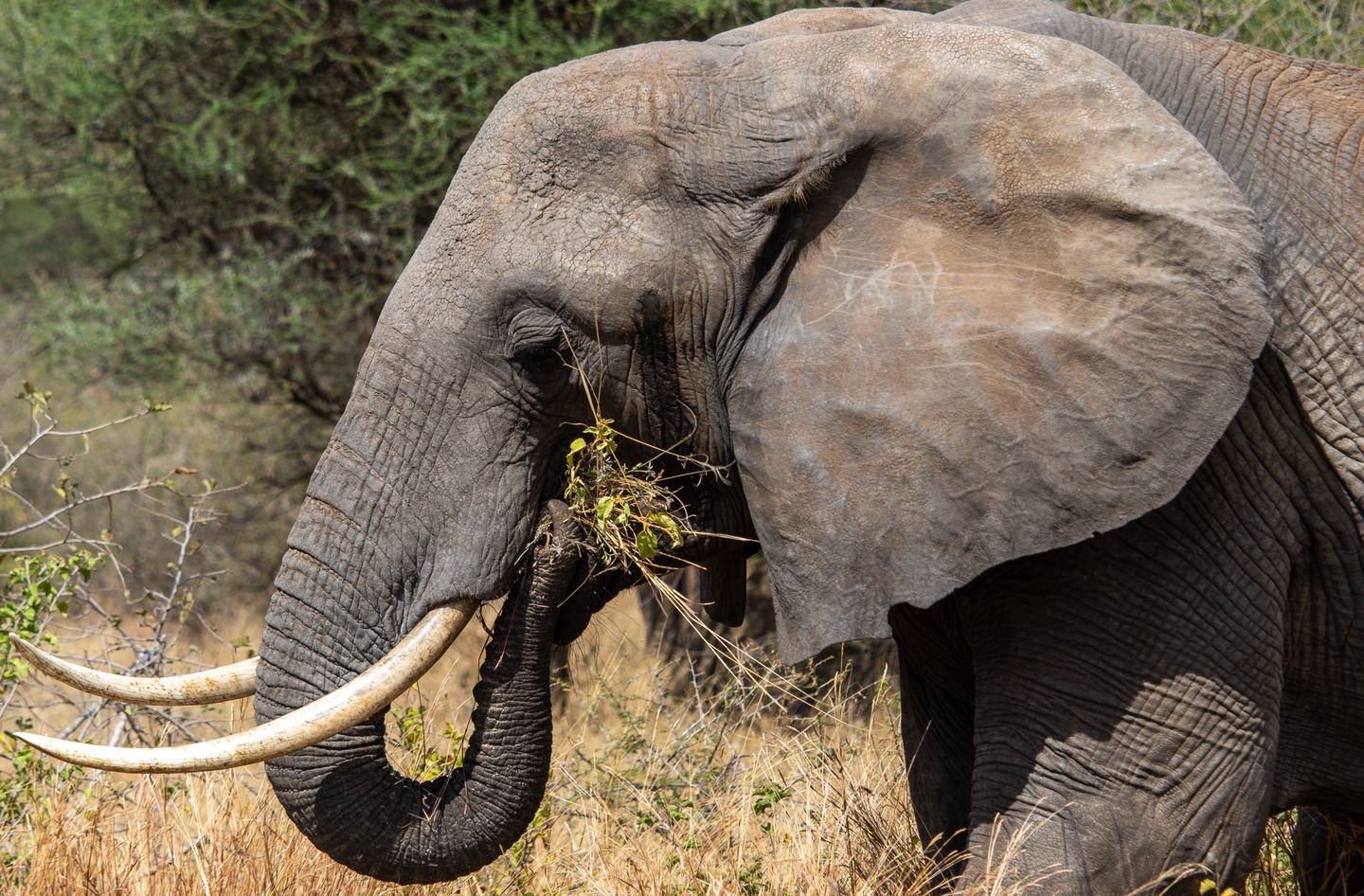
No land animal carries a comparison like the elephant. The Britannica entry on elephants describes the largest living land animal, an intelligent herbivore whose memory legends are built on — and the similes for elephant in this collection borrow all of it: the size, the gentleness, the memory, the thunder, and the playfulness.

In addition, writers reach for elephants because the animal holds opposites at once. It is the heaviest creature on land, yet it can walk almost silently and touch a baby with heartbreaking care. That contrast gives you two toolboxes in one animal: images of unstoppable strength, and images of tenderness that surprise the reader.
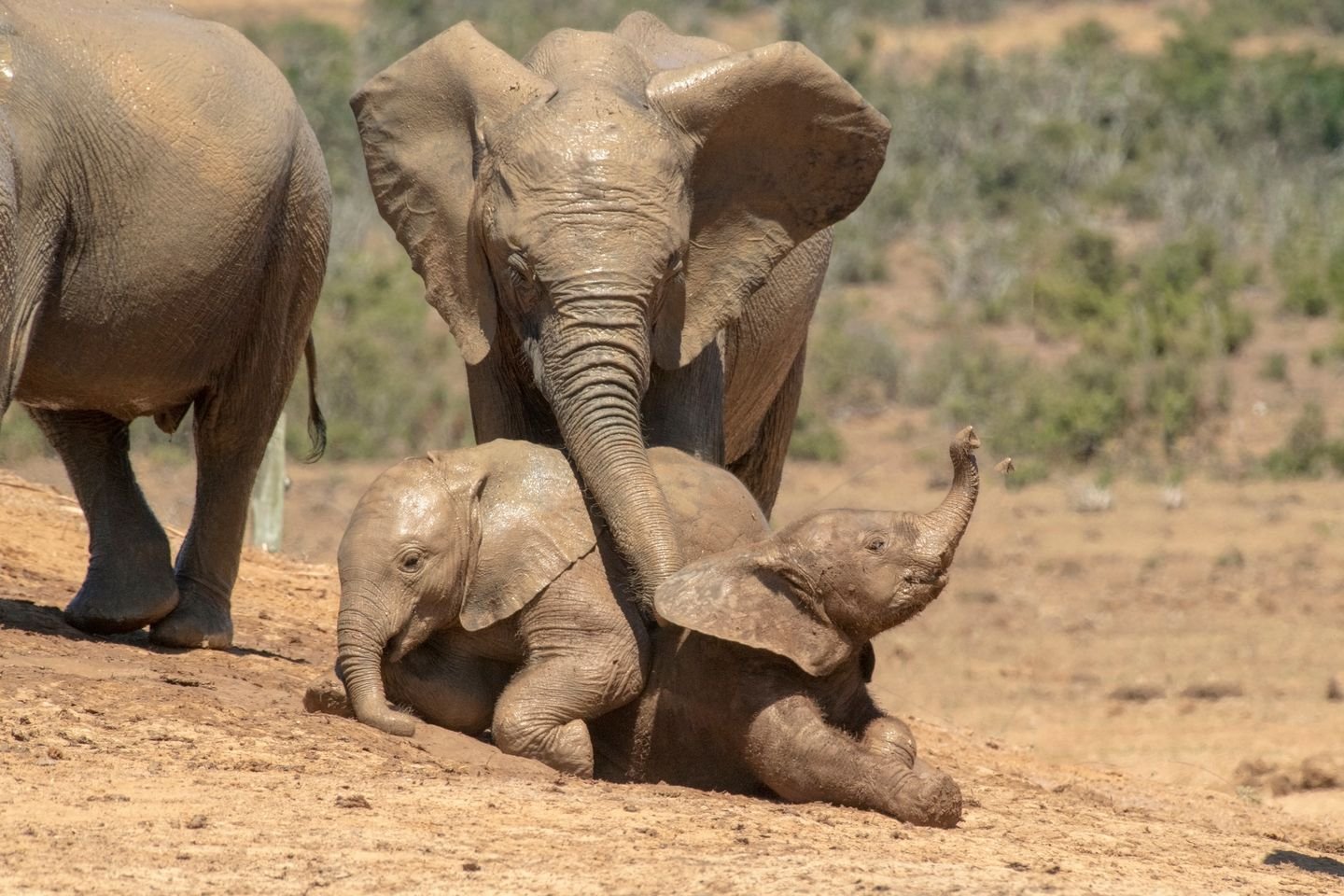
For example, below you will find 45 similes for elephant in five groups — big and strong, gentle and kind, memory and wisdom, slow steps and loud sounds, and playful baby elephants. Every simile comes with a simple meaning, so you can pick the exact trait your sentence needs.
Similarly, match the trait, not just the animal: a mountain for size, a library for memory, a puppy for a calf at play. And when plain size is all you need, in every shape and form, see our similes for big as well.
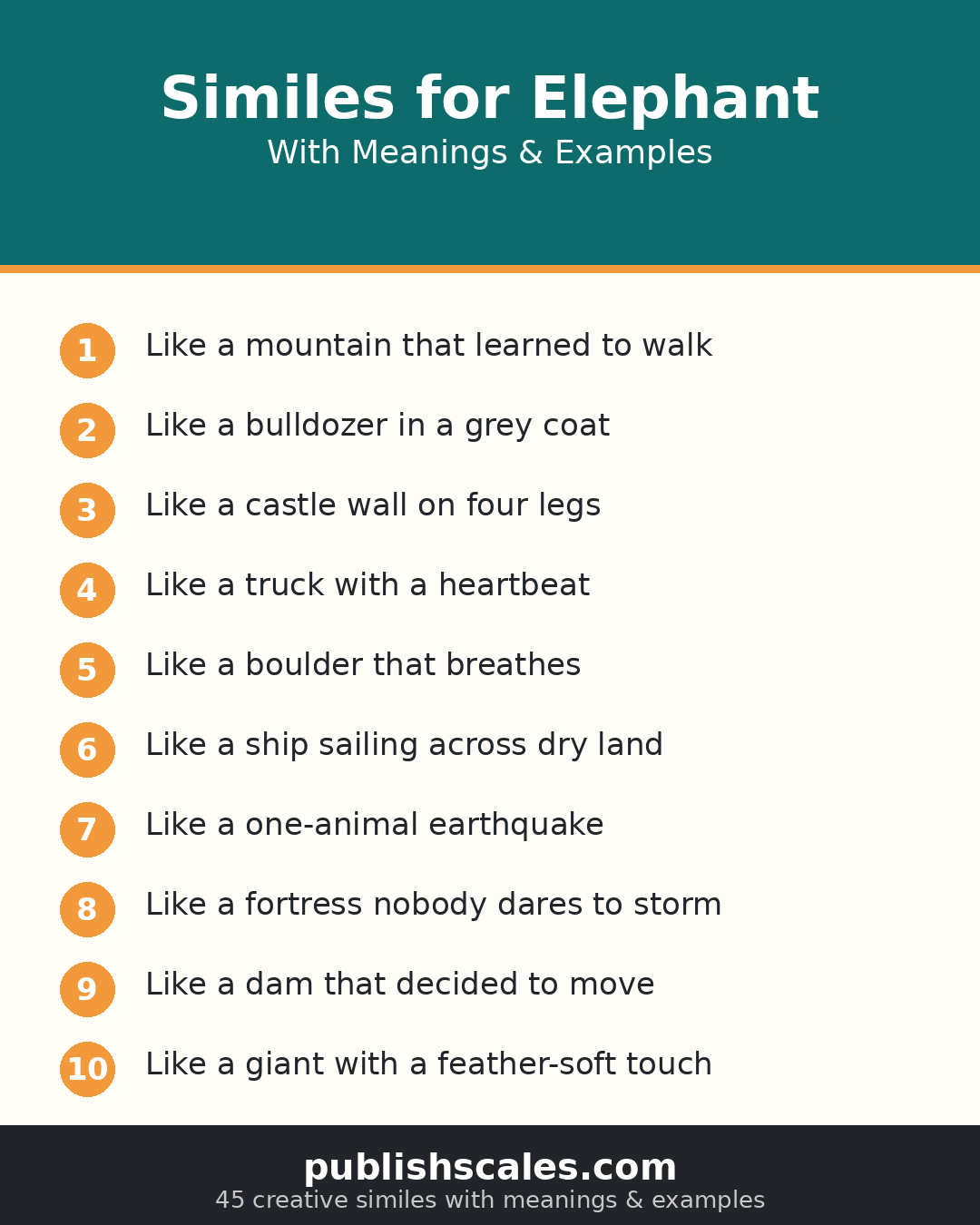
Big and Strong
First, start with the obvious gift of the elephant: sheer size joined to real power. These similes suit strong characters, heavy loads, big machines, and anything that changes a room just by entering it.
Like a mountain that learned to walk
For example, so huge and solid that the ground itself seems to notice every step.
Like a bulldozer in a grey coat
In addition, slow, heavy, and impossible to stop once it starts moving forward.
Like a castle wall on four legs
Similarly, a living barrier that protects everything standing behind it.
Like a truck with a heartbeat
All the weight and power of a machine, yet warm and alive.
Like a boulder that breathes
Rock-hard and heavy, but quietly alive in a way stone never is.
Like a ship sailing across dry land
Vast and steady, moving through the landscape like water is under it.
Like a one-animal earthquake
Its steps alone are enough to shake the ground for everyone nearby.
Like a fortress nobody dares to storm
So strong and well defended that trouble simply walks around it.
Like a dam that decided to move
A wall of held-back power, suddenly walking wherever it pleases.
Gentle and Kind
Similarly, real elephants are famous for their softness: they greet, comfort, and mourn their own. Use these similes for gentle giants, kind protectors, and strength that chooses to be tender.
Like a giant with a feather-soft touch
For example, enormous strength held back into the lightest, kindest contact.
Like a grandmother the size of a house
In addition, huge, warm, and entirely devoted to looking after the family.
Like a soft cloud wearing grey
Similarly, big and looming at a distance, yet soft and harmless up close.
Like a slow river that never floods its banks
Powerful and constant, but always in calm, gentle control.
Like a bodyguard with a tender heart
Built to frighten enemies, but gentle with everyone it loves.
Like a big brother watching over the little ones
Always nearby, always alert, and quietly keeping the young ones safe.
Like a pillow that weighs five tons
Impossibly heavy, yet somehow all comfort when you lean on it.
Like a kind king who never raises his voice
Supreme power that rules by calm presence instead of fear.
Like a warm blanket with big ears
Something vast that exists, as far as you can tell, to comfort you.
Memory and Wisdom
Also, elephants remember water holes across decades and recognise friends after years apart. These similes fit wise elders, sharp memories, and anyone whose experience quietly guides the group.
Like a library that never loses a book
For example, a memory that keeps every fact and story exactly where it belongs.
Like a grandfather who remembers every road
In addition, age and experience combined: every path was walked once and never forgotten.
Like a map written in wrinkles
Similarly, a face and body marked by every journey life has taken it on.
Like a diary that keeps every page
Nothing that happened is ever truly lost or torn out.
Like an elder who has seen fifty dry seasons
Wisdom earned by surviving hard years that defeated many others.
Like a history book that walks beside you
The past itself, alive and travelling with the group.
Like a grandmother who forgets no birthday
A memory used for love: every person and every date still matters.
Like a memory bank with a heartbeat
Vast, precise storage of the past, kept by a living, feeling heart.
Like an old chief listening before he speaks
Wisdom shown in patience: hearing everything before offering one word.
Slow Steps and Loud Sounds
At the same time, an elephant walks on tiptoe, in near silence, yet its trumpet can carry for miles. These similes capture heavy footsteps, deep rumbles, sudden trumpeting, and anything slow but unstoppable.
Like thunder learning to tiptoe
For example, something massively heavy moving with impossible, careful quiet.
Like a drum the size of a house
In addition, a deep, booming sound that you feel in your chest, not just hear.
Like a slow parade of one
Similarly, a single, stately procession that needs no crowd to feel grand.
Like a trumpet blown by the jungle itself
A wild, ringing call that seems to come from the whole forest.
Like a heartbeat you can feel through the ground
Steps so heavy the earth carries their rhythm to your feet.
Like a slow train that is never in a hurry
Immense, steady, and certain to arrive exactly when it arrives.
Like a foghorn in the middle of the forest
A huge warning blast sounding where no one expected any ships.
Like a glacier that trumpets
Slow beyond measuring, yet able to announce itself with a mighty call.
Like drums rolling far across the savanna
A low, travelling rumble that tells everyone the herd is coming.
Playful Baby Elephants
Similarly, a calf can weigh more than a grown man and still behave like a toddler. These similes fit playful children, clumsy beginners, and any small character with enormous energy.
Like a puppy the size of a small car
For example, all bounce, curiosity, and affection, in a surprisingly enormous body.
Like a toddler in a grey costume
In addition, wobbly, wondering, and learning the world one stumble at a time.
Like a bouncing ball with a trunk
Similarly, energy that simply will not stay on the ground.
Like a giggle you can watch
Pure delight made visible, impossible to look at without smiling.
Like a splash looking for a puddle
Joy hunting for the nearest excuse to get wet and muddy.
Like a little clown learning to walk
Every wobble and tumble turns into accidental comedy.
Like a kite tripping over its own string
Its own trunk keeps getting underfoot, and it cannot work out why.
Like a puppy chasing its own trunk
Playing seriously with the one toy it can never quite catch.
Like a grey balloon that cannot sit still
Round, light-hearted, and drifting off in a new direction every second.
Bonus: Elephant Sayings Explained
In fact, elephants also gave English a set of fixed sayings — ready-made phrases with set meanings. They are not similes, and mixing the two up weakens both, so here is what each saying really means and when to use it.
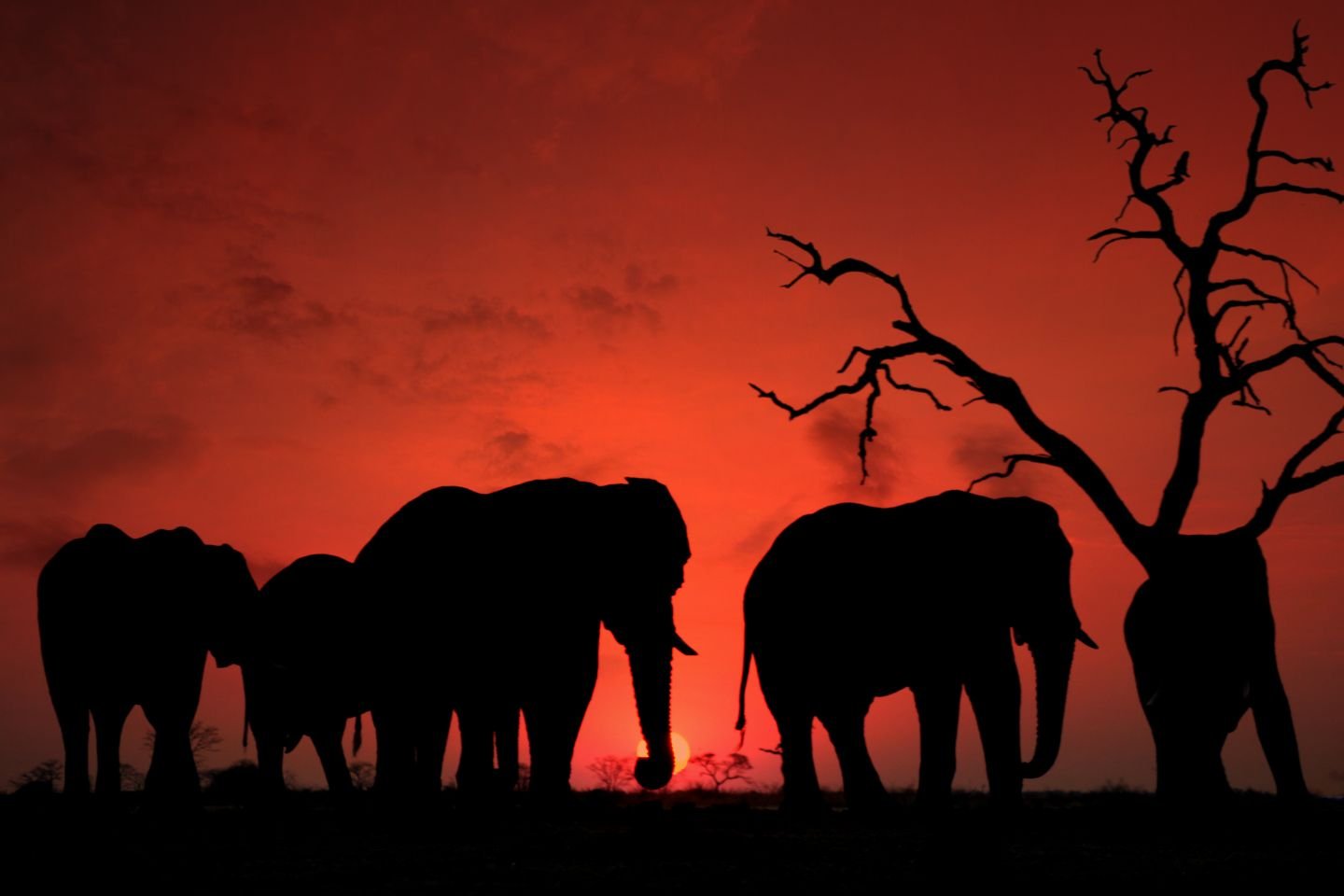
“The elephant in the room” names a big, obvious problem that everyone can see but nobody wants to mention. A manager ignoring a failed project while discussing office snacks is living with an elephant in the room. Use the saying when silence, not size, is the point.
“An elephant never forgets” is the proverb behind half the memory similes above. It praises a person who remembers favours, faces, and promises for years. It works as a compliment — and, said with a smile, as a warning to anyone who once crossed that person.
“A white elephant” is a possession that costs a fortune to keep and cannot be sold or given away. The phrase comes from stories of kings gifting rare white elephants that had to be fed and housed like royalty. A rusting boat or an oversized gift shop fits it perfectly.
Therefore, how do sayings differ from similes? A saying is a fixed phrase you quote as it stands; its meaning is locked in by tradition. A simile is a fresh comparison you build yourself with like or as, shaped for one exact person, moment, or scene. Quote the sayings when you want shared wisdom — build a simile when you want your own.
Quick Reference: 10 Similes for Elephant at a Glance
In short, need one fast? This table matches ten of the most useful elephant similes to the situations they describe best.
| Simile | What It Describes |
|---|---|
| Like a mountain that learned to walk | Huge size and unstoppable presence |
| Like a castle wall on four legs | Strength that protects others |
| Like a giant with a feather-soft touch | Great strength used gently |
| Like a grandmother the size of a house | Warm, devoted family care |
| Like a library that never loses a book | A perfect, lifelong memory |
| Like a map written in wrinkles | Wisdom and experience worn openly |
| Like thunder learning to tiptoe | Heavy steps moving in near silence |
| Like a drum the size of a house | A deep, booming trumpet call |
| Like a puppy the size of a small car | A playful, bouncing baby elephant |
| Like a grey balloon that cannot sit still | A restless, joyful young calf |
How to Use Elephant Similes in Writing
First, choose the trait before the animal. An elephant can mean size, strength, gentleness, memory, slowness, noise, or playfulness, and your scene needs exactly one of them. Decide the trait, then borrow its image.
Next, let the elephant describe people as happily as animals. A kind headmaster is a giant with a feather-soft touch, a grandmother with a perfect memory is a library that never loses a book, and a toddler at a wedding can be a puppy the size of a small car.
Then, place your strongest elephant simile where the scale changes: a first entrance, a sudden trumpet of temper, or the quiet moment the gentle giant chooses not to use its strength. Readers remember the image that arrives with the turn.
Finally, play with contrast. An elephant simile lands hardest next to something small: the huge animal tiptoeing past a sleeping bird, or the tiny mouse that the mountain politely steps around. Contrast is what makes the size real.
Common Mistakes to Avoid with Elephant Similes
For example, elephants are beloved, which makes lazy elephant writing easy to spot. Watch for these five traps.
Using an elephant as a lazy fat joke
For example, comparing a person to an elephant only to mock their body is cruel and dull, and readers quickly side against the narrator. Fix it by comparing a trait instead of a body: strength, patience, memory, or calm.
Making every elephant clumsy and destructive
In addition, real elephants are careful animals that can step around eggs without breaking them. A herd written as walking wrecking balls feels false. Fix it with the gentle-giant images: thunder learning to tiptoe says more than any smashed fence.
Leaning on “an elephant never forgets” every time
Similarly, the saying is so famous that it lands as decoration, not description. Readers skim straight past it. Fix it by building a fresh memory image — a library that never loses a book, or a diary that keeps every page.
Stacking three size images in one breath
A character like a mountain, a truck, and a house in a single sentence does not feel three times bigger; the images cancel out. Choose the one comparison your scene can see and touch, and let the others go.
Giving elephant similes to quick, tiny, silent things
An elephant image promises weight, slowness, and presence, so a hummingbird described this way confuses the reader. Save elephant similes for subjects that share the trait — unless the mismatch itself is the joke, clearly told.
Frequently Asked Questions
What is a simile for an elephant?
For example, a simile for an elephant compares something to the animal using like or as. For example, a very strong, quiet man might be like a giant with a feather-soft touch — huge in power, gentle in action.
What is a good simile for an elephant’s memory?
One of the best is like a library that never loses a book, because elephants genuinely remember places and companions for decades. Like a diary that keeps every page works for a more personal, written feel.
How do I describe an elephant’s size in writing?
Compare it to objects readers already feel in their bodies: a mountain that learned to walk, a truck with a heartbeat, a castle wall on four legs. Then add one small thing beside it — a bird, a bucket — so the scale becomes visible.
Is “the elephant in the room” a simile?
No. It is an idiom — a fixed saying meaning an obvious problem nobody mentions. A simile, by contrast, is a fresh comparison you build with like or as, such as footsteps like thunder learning to tiptoe.
Can elephant similes be used for people?
Yes, and they are at their best there. Gentle giants, wise grandparents, protective older brothers, and playful toddlers all borrow elephant traits beautifully — as long as you compare the trait, never the body shape.
Final Thought
In conclusion, the elephant is the rare animal that can carry almost any meaning a writer needs: power that protects, size that tiptoes, memory that forgives nothing and forgets less, and a baby that turns weight into comedy. Choose the one trait your scene is really about, and the biggest land animal on Earth will fit into a single sentence.

The PublishScales Editorial Team researches and writes clear, original guides to similes and figurative language.


