

Jumping is one of the most joyful actions there is. Children jump when excited, athletes jump to win, and animals seem to jump for the fun of it. Plain words, however, can make this lively action sound flat. Saying that someone “jumped high” tells the reader very little. This is where similes for jumping earn their place. A simile compares the jump to something familiar, so readers can see its height, feel its energy and sense the emotion behind it in one line. The dictionary keeps the action simple: to jump is to push yourself suddenly off the ground, as the Cambridge Dictionary definition of jump explains. A good simile takes that plain definition and gives it wings.
Below you will find forty-five jumping similes grouped by mood and moment. Some, for example, celebrate pure happiness, others borrow the spring of kangaroos and cats, and a few catch the shock of a fright. If you enjoy cheerful comparisons, our similes for playful collection is a happy place to hop next. Pick the images that fit your scene, and let your writing leave the ground.

Jumping for Joy
Some jumps come straight from happiness. These comparisons capture the moment when joy simply cannot stay on the ground.
- jumped like a toddler on a trampoline
Meaning: with endless, bouncy, uncontainable delight.
Example: When the ice cream van turned into our street, Mia jumped like a toddler on a trampoline. - leapt like a cork from a bottle
Meaning: bursting out suddenly with excitement and relief.
Example: When the results were announced, Arham leapt like a cork from a bottle, cheering loudly. - bounced like popcorn in a hot pan
Meaning: jumping again and again, unable to sit still with happiness.
Example: The whole class bounced like popcorn when the teacher cancelled the test. - jumped like a jack-in-the-box at a party
Meaning: springing up suddenly with cheerful surprise.
Example: Grandpa jumped like a jack-in-the-box when the grandchildren burst in singing happy birthday. - leapt like a fan whose team just scored
Meaning: throwing yourself into the air in instant celebration.
Example: When the final goal went in, Daniyal leapt like a fan whose team just scored. - jumped like bubbles rushing up in soda
Meaning: rising quickly and lightly, full of fizz and sparkle.
Example: The little dancers jumped like bubbles in soda, bright and impossible to hold down. - bounced like a puppy at the front door
Meaning: with eager, loving excitement that repeats itself.
Example: Sara bounced like a puppy when she heard her brother’s car outside. - jumped like a cheerleader at the winning point
Meaning: with polished, full-hearted celebration and high energy.
Example: After hitting the final note, Zara jumped like a cheerleader at the winning point. - leapt like a child into a pile of leaves
Meaning: throwing yourself into happiness without a second thought.
Example: Hearing the holiday news, the twins leapt like children into a pile of leaves, laughing.
Animals in Motion
No one jumps quite like an animal. Indeed, from kangaroos to startled cats, these similes borrow the power and grace of the wild.
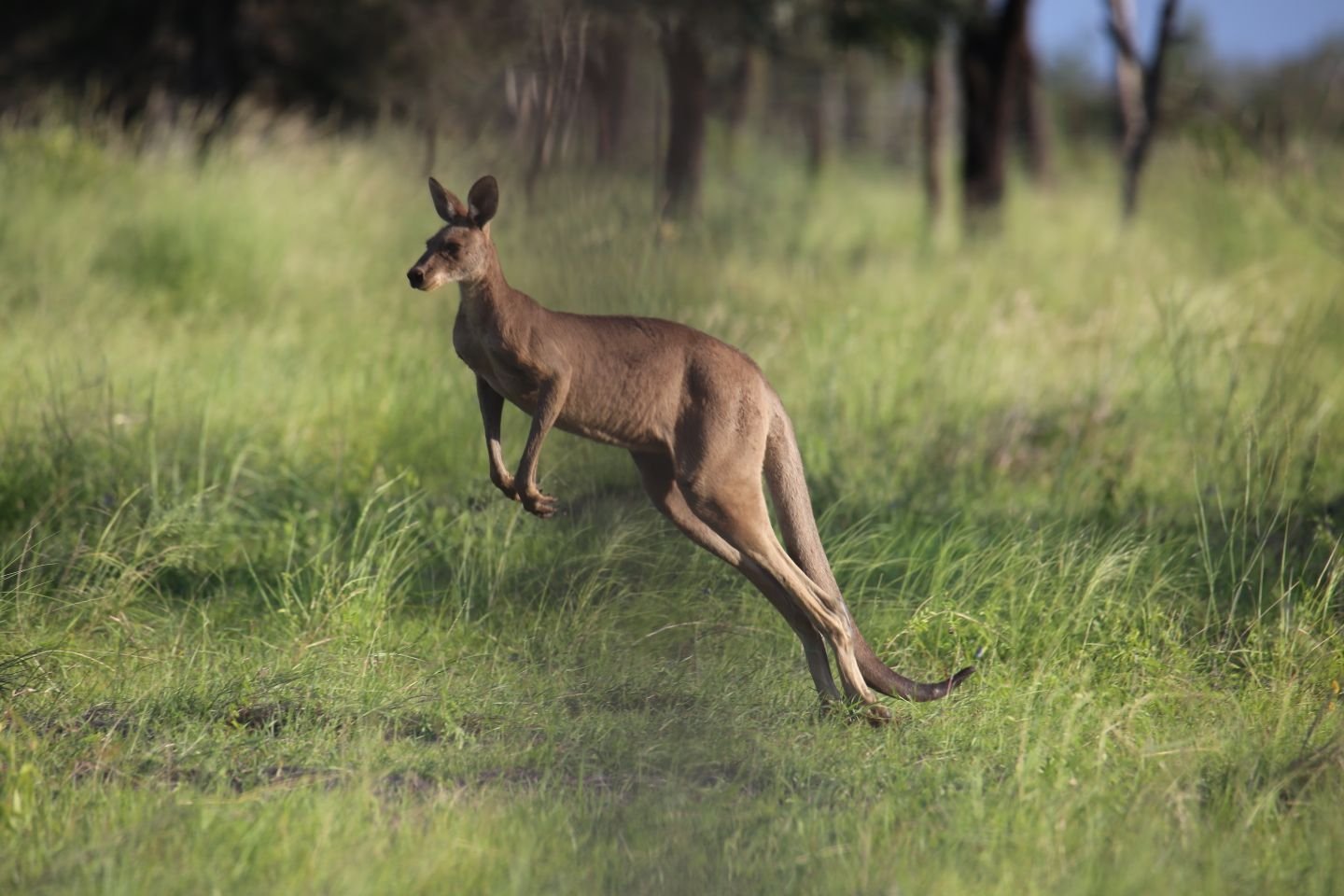
- jumped like a kangaroo crossing the outback
Meaning: in long, powerful bounds that cover ground quickly.
Example: The athlete jumped like a kangaroo, eating up the track with every bound. - jumped like a startled cat
Meaning: shooting straight up in sudden alarm.
Example: When the balloon burst behind him, little Omar jumped like a startled cat. - leapt like a frog between lily pads
Meaning: in neat, quick hops from one spot to another.
Example: The children leapt like frogs, hopping across the painted circles on the playground. - jumped like a flea off a resting dog
Meaning: in a tiny but astonishingly high, quick spring.
Example: The grasshopper jumped like a flea off a resting dog, gone before anyone could blink. - leapt like a deer over a fence
Meaning: gracefully and effortlessly, clearing obstacles with ease.
Example: She leapt like a deer over the fence, landing softly without breaking stride. - jumped like a goat on a rocky hillside
Meaning: nimbly, with sure feet on uneven ground.
Example: The hiker jumped like a goat on a rocky hillside, sure-footed on every stone. - leapt like a dolphin breaking the surface
Meaning: in a smooth, joyful arc through the air.
Example: The swimmer leapt like a dolphin, curving cleanly into the blue water. - jumped like a monkey between branches
Meaning: quickly and playfully, swinging from point to point.
Example: The boys jumped like monkeys, racing each other through the old mango tree. - leapt like a hare dodging danger
Meaning: in fast, zigzag hops meant to escape.
Example: The rabbit leapt like a hare, zigzagging across the field to the hedge.
Sports and Play
Athletes, meanwhile, train to leave the ground well. These similes bring the timing, height and courage of sport into everyday writing.
- jumped like a basketball player reaching for a dunk
Meaning: with maximum height, power and reach.
Example: He jumped like a basketball player, stretching every inch toward the high shelf. - leapt like a high jumper clearing the bar
Meaning: with technique, timing and total commitment.
Example: Areeba leapt like a high jumper, arching her back as she sailed over the puddle. - bounced like a gymnast on a spring floor
Meaning: lightly and repeatedly, using the bounce to go higher.
Example: The performer bounced like a gymnast, each landing setting up the next trick. - jumped like a skateboarder catching air
Meaning: fearlessly, lifting off at speed with style.
Example: The boy jumped like a skateboarder catching air, fearless as his board left the ramp. - leapt like a volleyball player at the net
Meaning: timing the jump perfectly to strike at the top.
Example: She leapt like a volleyball player, meeting the ball at its highest point. - jumped like a champion at hopscotch
Meaning: in quick, precise hops that land exactly right.
Example: The girl jumped like a champion at hopscotch, landing in every square without touching a line. - bounced like a boxer on his toes
Meaning: staying light and ready, never flat-footed.
Example: The goalkeeper bounced like a boxer, ready to spring either way. - leapt like a diver from the highest board
Meaning: bravely, with a clean and confident take-off.
Example: Taking a deep breath, Hamza leapt like a diver from the highest board, straight and fearless. - jumped like a dancer in the final leap
Meaning: gracefully, turning a jump into art.
Example: In the last scene, she jumped like a dancer, hanging in the air for a heartbeat.
Sudden Jumps and Surprises
Not every jump is planned; in fact, a sudden sound or shock can send anyone into the air, and these similes catch that instant.
- jumped like someone who sat on a pin
Meaning: shooting up instantly because of a sharp surprise.
Example: When the cold water splashed his back, Bilal jumped like someone who sat on a pin. - popped up like toast from a toaster
Meaning: springing up suddenly and a little comically.
Example: At her name, Hira popped up like toast from a toaster, wide-eyed. - jumped like a mouse that spotted a cat
Meaning: with instant panic and a scramble to escape.
Example: The sparrow jumped like a mouse, vanishing into the bushes in a flash. - leapt like a guard who heard an alarm
Meaning: moving from stillness to action in one sharp moment.
Example: When the phone rang at midnight, Father leapt like a guard who heard an alarm. - jumped like a sleeper woken by thunder
Meaning: with a full-body startle from deep rest.
Example: The dog jumped like a sleeper woken by thunder when the gate slammed shut. - flipped like a fish out of a net
Meaning: thrashing and twisting in frantic escape.
Example: Caught by surprise, the cat flipped like a fish and dashed under the sofa. - jumped back like he had touched a hot stove
Meaning: recoiling instantly from something shocking or painful.
Example: Reading the message, Ahmed jumped back like he had touched a hot stove. - bounced like phones buzzing on a table
Meaning: jittering and skittering in short, startled bursts.
Example: Startled by the firecracker, the pigeons bounced like phones buzzing, scattering in every direction. - jumped like a cricket at a footstep
Meaning: springing away at the slightest disturbance.
Example: The tiny frog jumped like a cricket, disappearing into the grass in a blink.

Everyday Energy and Fun
Finally, energy shows up in ordinary moments too. These everyday comparisons suit children, celebrations and anyone full of beans.
- jumped like a kid on the last day of school
Meaning: with freedom, relief and pure celebration.
Example: When the bell rang, the students jumped like kids on the last day of school, tossing their caps high. - bounced like a rubber ball on the pavement
Meaning: with springy energy that keeps coming back.
Example: Even after the long walk, Fatima bounced like a rubber ball, ready for more. - jumped like a spark from a campfire
Meaning: darting up quickly, bright and lively.
Example: The puppy jumped like a spark from a campfire, here one second and there the next. - leapt like a beach ball over the waves
Meaning: lightly and playfully, carried by the moment.
Example: The children leapt like beach balls over the waves, squealing at every splash. - bounced along like a stone skipping on water
Meaning: in a series of light, quick touches that keep momentum.
Example: The toddler bounced along like a skipping stone, barely touching the ground between hops. - jumped like a puppet on lively strings
Meaning: in jerky, cheerful movements full of animation.
Example: In the school play, the actor jumped like a puppet on strings, delighting the crowd. - leapt like a dancer at a wedding
Meaning: joyfully and without embarrassment, drawn in by the music.
Example: Uncle leapt like a dancer at a wedding, spinning into the circle to loud applause. - jumped like he was walking on hot sand
Meaning: hopping quickly from foot to foot, unable to stay still.
Example: Waiting for his turn, the boy jumped like he was walking on hot sand, shifting and hopping with impatience. - bounced like a baby in a bouncer
Meaning: with simple, repetitive delight and no tiredness at all.
Example: The little girl bounced like a baby in a bouncer, giggling every time her feet left the mat.
Quick Reference: 10 Jumping Similes at a Glance
| Simile | Best For |
|---|---|
| jumped like a kangaroo crossing the outback | Long, powerful bounds |
| jumped like a toddler on a trampoline | Pure, endless joy |
| jumped like a startled cat | A sudden fright |
| bounced like popcorn in a hot pan | Restless group excitement |
| leapt like a cork from a bottle | Sudden relief and celebration |
| leapt like a high jumper clearing the bar | Skill, timing and effort |
| leapt like a dolphin breaking the surface | Graceful, smooth leaps |
| popped up like toast from a toaster | Comic sudden rising |
| jumped like a kid on the last day of school | Freedom and celebration |
| leapt like a deer over a fence | Effortless, elegant movement |
How to Use Jumping Similes in Writing
Start with the feeling, not the action. Every jump happens for a reason: joy, fear, sport, surprise or simple energy. Decide what your character feels, then choose the comparison carrying the same feeling. A child who has won a prize bounces like popcorn in a hot pan, while a guard at a midnight sound leaps like a guard who heard an alarm. The movement is identical, but the pictures tell different stories. In the same way, match the image to the character too: children suit puppies and trampolines, athletes suit high jumpers, and a frightened character suits startled cats. When the comparison fits the person, readers believe it instantly.
Use one strong simile at the peak moment rather than scattering many through a paragraph. A single well-placed comparison gives the jump its full height; five in a row, in contrast, leave the reader dizzy and the scene flat. Above all, keep the simile short so the action stays quick, and place it where the feet leave the ground. Finally, read the sentence aloud. A jumping simile should feel springy and light on the tongue. If it lands with a thud, swap the image for a simpler one your reader can see at once.
Common Mistakes to Avoid with Jumping Similes
1. Matching the Simile to the Wrong Emotion
Writers often grab the first simile they remember, even when its feeling clashes with the scene. A terrified character who “bounced like popcorn in a hot pan” sounds happy, not scared. As a result, readers feel the mismatch. Decide the emotion first, fear, joy, effort or surprise, then pick a comparison from that family.
2. Piling Too Many Similes into One Scene
When every jump gets its own comparison, none stand out, and the writing feels bouncy in the wrong way. The scene turns into a list instead of a moment. So choose the most important jump, give it your best simile, and let other movements stay plain.
3. Choosing Images Readers Cannot Picture
A simile works only if readers instantly see the comparison. Obscure references, private jokes and objects from a narrow hobby leave most readers blank while they puzzle it out. In particular, favour widely known images such as kangaroos, trampolines and startled cats, or add a few words of context so an unusual image explains itself.
4. Mixing Two Pictures in One Simile
Sentences like “he jumped like a kangaroo on a trampoline in the sea” ask readers to hold three images at once, and the result is confusion rather than colour. Each picture fights the others. Consequently, none lands. Keep one clear image per simile; save a second favourite for a later scene.
5. Reusing the Same Tired Simile Everywhere
Reaching for “jumped like a cat” on every page makes writing feel lazy, and readers stop picturing anything. Familiar similes are welcome, but refresh them with a specific detail: a startled cat works far better when the balloon bursts behind it. In short, small, concrete touches turn a worn phrase fresh again.
Frequently Asked Questions
What is a simile for jumping?
A simile for jumping compares a jump using like or as, such as “jumped like a kangaroo.” It borrows the qualities of something familiar, height, speed, grace or panic, so readers can picture the jump clearly. In short, similes make a simple action vivid in a few words.
What is a good simile for jumping with joy?
“Jumped like a toddler on a trampoline” is a favourite because everyone has seen that endless, bouncy delight. “Bounced like popcorn in a hot pan” works beautifully for a group that cannot sit still. Both images are cheerful, familiar and full of upward energy.
How can I create my own jumping simile?
Picture the jump and name its strongest quality: height, speed, grace or suddenness. Then think of something famous for that quality, a kangaroo, a spring, a startled cat, and join the two with like or as. Then read it aloud; a good one is easy to picture instantly.
Which simile describes a sudden, frightened jump?
“Jumped like a startled cat” is the classic choice, because cats shoot straight up when alarmed. “Jumped like someone who sat on a pin” adds a comic touch. For a whole-body startle, “jumped like a sleeper woken by thunder” paints the picture well.
Can I use jumping similes in school essays and stories?
Yes, similes are welcome in stories, descriptive essays and speeches, where they make scenes lively and memorable. Use them sparingly, one at the important moment, so each keeps its effect. In formal reports, plain description is usually better than decoration.
What is the difference between a simile and a metaphor for jumping?
A simile compares using like or as: “She jumped like a deer.” A metaphor states it outright: “She was a deer, clearing the fence in one bound.” Similes are gentler and clearer for young readers; metaphors are bolder and more poetic.
Final Thought
A jump lasts a second, but the right simile makes it live in the reader’s mind long after the page is turned. Whether your character leaps for joy, springs in fright or soars like an athlete, this collection holds a comparison that fits. Pick the one matching the feeling, use it once and well, and your writing will leave the ground.

The PublishScales Editorial Team researches and writes clear, original guides to similes and figurative language.


