Orange is the colour of endings and beginnings at once. It closes the day in a blaze of sunset, yet it also opens the morning with fresh juice and bright peel. In fact, few shades carry so much warmth, appetite and energy in a single glance. That is exactly why writers reach for similes for orange when a plain colour word feels too flat. The dictionary keeps the idea simple: orange is a colour between red and yellow, as the Merriam-Webster definition of orange explains. A good simile, however, does far more than name the shade. It lets readers feel the heat of the fire, taste the fruit and watch the sky change colour.
This collection covers both sides of the word. Some similes borrow the glow of skies, flames and autumn leaves. Others, meanwhile, celebrate the fruit itself: sweet, juicy and impossibly fresh. In addition, you will find bold comparisons for anything bright, brave and full of life. If you are hunting for another shade instead, our similes for colours collection gathers comparisons for the whole rainbow. In short, pick the orange that fits your scene, whether it hangs in the sky or sits in a fruit bowl.
Orange Skies and Sunsets
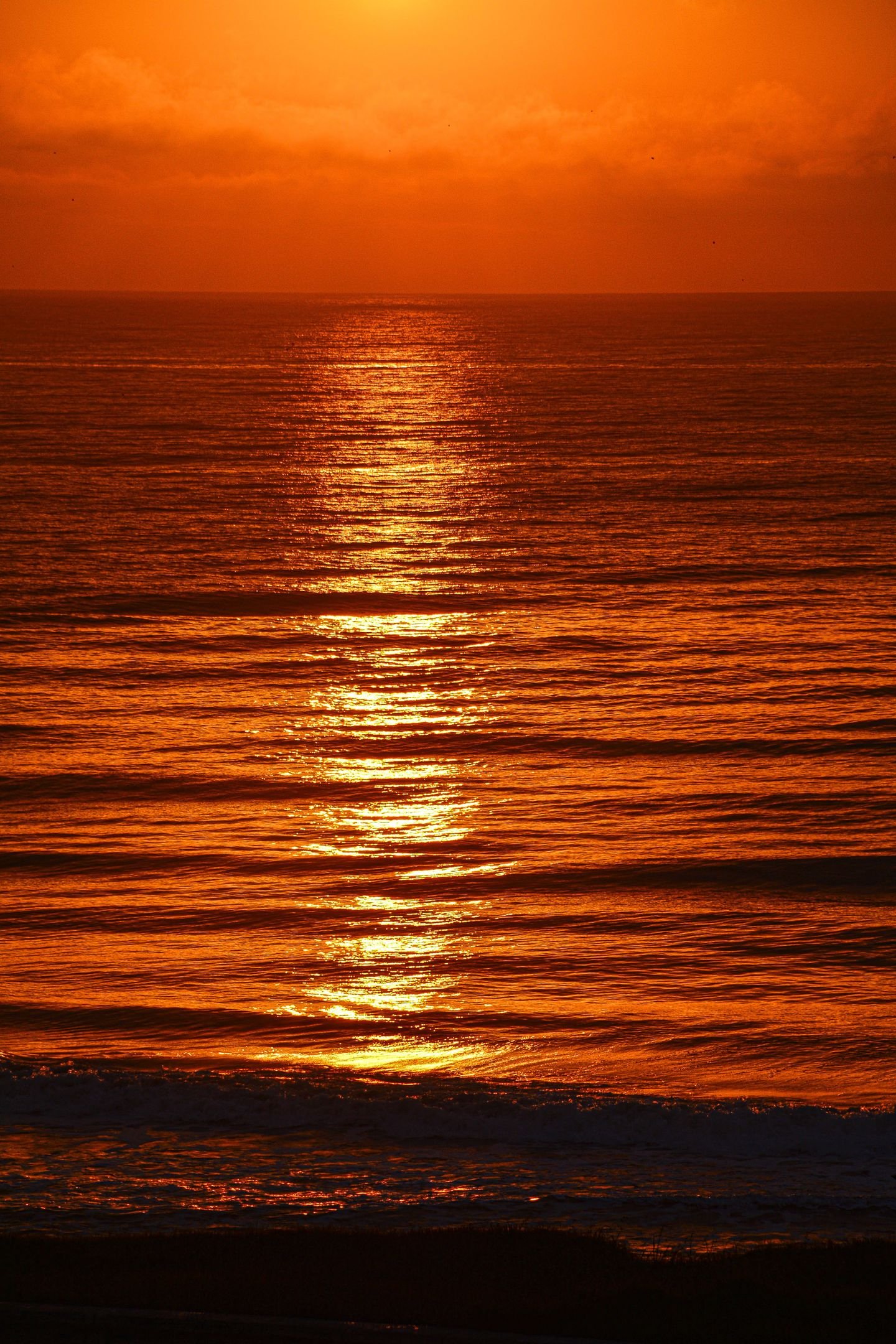
The day rarely ends quietly when orange fills the sky. These comparisons capture sunsets, dawns and that brief golden minute when the whole world seems lit from inside.
- orange like the sky at sunset
Meaning: glowing with the warm, fading light of the end of the day.
Example: From the hilltop, the whole valley turned orange like the sky at sunset. - orange like a tangerine sun sinking into the sea
Meaning: round, bright and slowly disappearing from sight.
Example: The sun hung over the harbour, orange like a tangerine sun sinking into the sea. - orange like dawn breaking over the hills
Meaning: soft, hopeful and full of brand-new light.
Example: The eastern sky woke up orange like dawn breaking over the hills. - orange like a lantern glowing at dusk
Meaning: small, warm and comforting in the growing dark.
Example: A single window in the cottage shone orange like a lantern glowing at dusk. - orange like clouds brushed with gold
Meaning: soft-edged and rich with evening light.
Example: Above the rooftops, the clouds drifted orange like clouds brushed with gold. - orange like the last light of a summer evening
Meaning: gentle, lingering and slightly sad.
Example: The garden faded into shadow, still orange like the last light of a summer evening. - orange like a horizon on fire
Meaning: blazing in colour across the whole width of the sky.
Example: After the storm, the west turned orange like a horizon on fire. - orange like marmalade spread across the sky
Meaning: thick, sweet-toned and cheerfully uneven.
Example: Breakfast could wait; the morning was orange like marmalade spread across the sky. - orange like the glow before the stars appear
Meaning: the brief, tender light between day and night.
Example: They walked home in silence, the road orange like the glow before the stars appear.
Fire and Warmth
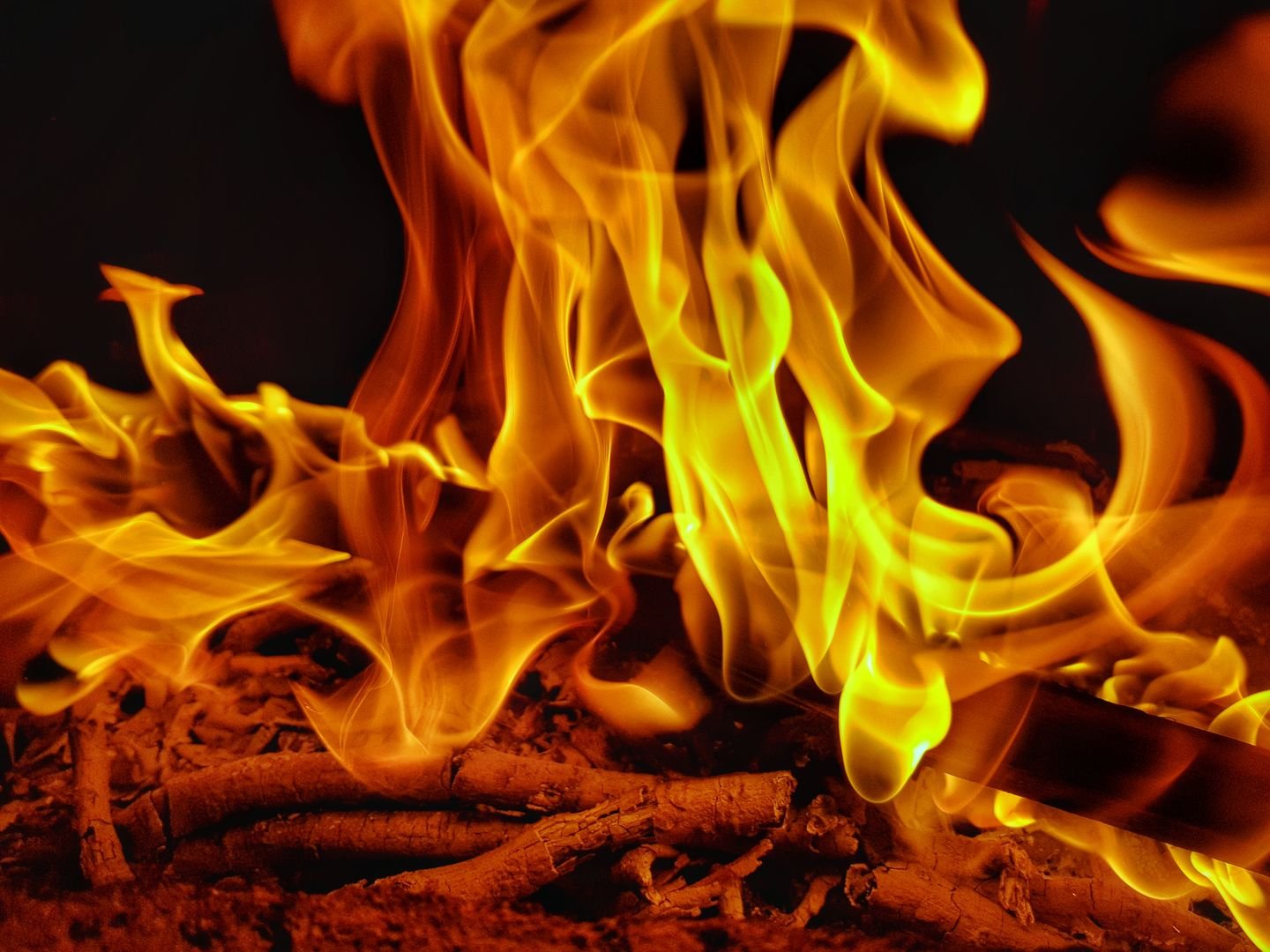
Orange is the colour we trust for heat. Indeed, every flame, ember and furnace glows in this shade, so these similes suit anything warm, alive or quietly dangerous.
- orange like flames in a fireplace
Meaning: lively, dancing and full of heat.
Example: The logs crackled, and the room turned orange like flames in a fireplace. - orange like embers breathing in the grate
Meaning: low, slow and quietly alive.
Example: Long after midnight, the fire still glowed orange like embers breathing in the grate. - orange like a candle flame in a dark room
Meaning: small, steady and precious against the dark.
Example: During the power cut, the kitchen stayed orange like a candle flame in a dark room. - orange like molten metal in a forge
Meaning: fiercely hot and almost liquid with heat.
Example: The metal poured from the furnace, orange like molten metal in a forge. - orange like a bonfire on a cold night
Meaning: welcoming heat that pulls everyone closer.
Example: The village square glowed orange like a bonfire on a cold night. - orange like sparks rising from a campfire
Meaning: brief, bright and full of quick energy.
Example: Fireworks burst overhead, orange like sparks rising from a campfire. - orange like the heart of a furnace
Meaning: the hottest and most intense point of all.
Example: At noon the desert road shimmered, orange like the heart of a furnace. - orange like a coal that refuses to die
Meaning: stubborn warmth that lasts and lasts.
Example: His hope stayed orange like a coal that refuses to die, even after the third rejection. - orange like lava flowing down a volcano
Meaning: slow, unstoppable and dangerously bright.
Example: In the photograph, the hillside ran orange like lava flowing down a volcano.
Autumn and Nature
When the year turns, orange takes over the landscape. Leaves, pumpkins and low moons all borrow the same colour, and as a result the season feels warm even as the air cools.
- orange like autumn leaves underfoot
Meaning: crisp, earthy and rich with the season.
Example: The path through the park lay orange like autumn leaves underfoot. - orange like a pumpkin ripening in the field
Meaning: plump, mellow and ready for harvest.
Example: The harvest moon rose over the barn, orange like a pumpkin ripening in the field. - orange like a fox slipping through the woods
Meaning: sleek, quick and touched with wild beauty.
Example: Something moved in the hedge, orange like a fox slipping through the woods. - orange like marigolds in a summer garden
Meaning: cheerful, dense and sunny.
Example: The border blazed orange like marigolds in a summer garden. - orange like a harvest moon hanging low
Meaning: huge, round and golden over the fields.
Example: The moon climbed over the rooftops, orange like a harvest moon hanging low. - orange like carrots pulled fresh from the soil
Meaning: earthy, honest and full of goodness.
Example: The bunch from the market shone orange like carrots pulled fresh from the soil. - orange like a monarch butterfly’s wings
Meaning: patterned, delicate and made for sunlight.
Example: The kite danced above the beach, orange like a monarch butterfly’s wings. - orange like ripe apricots on the branch
Meaning: soft-toned, sweet and touched with blush.
Example: The cheeks of the peaches glowed orange like ripe apricots on the branch. - orange like clay earth after the rain
Meaning: deep, damp and rich with colour.
Example: The track through the village ran orange like clay earth after the rain.
The Fruit: Sweet and Juicy
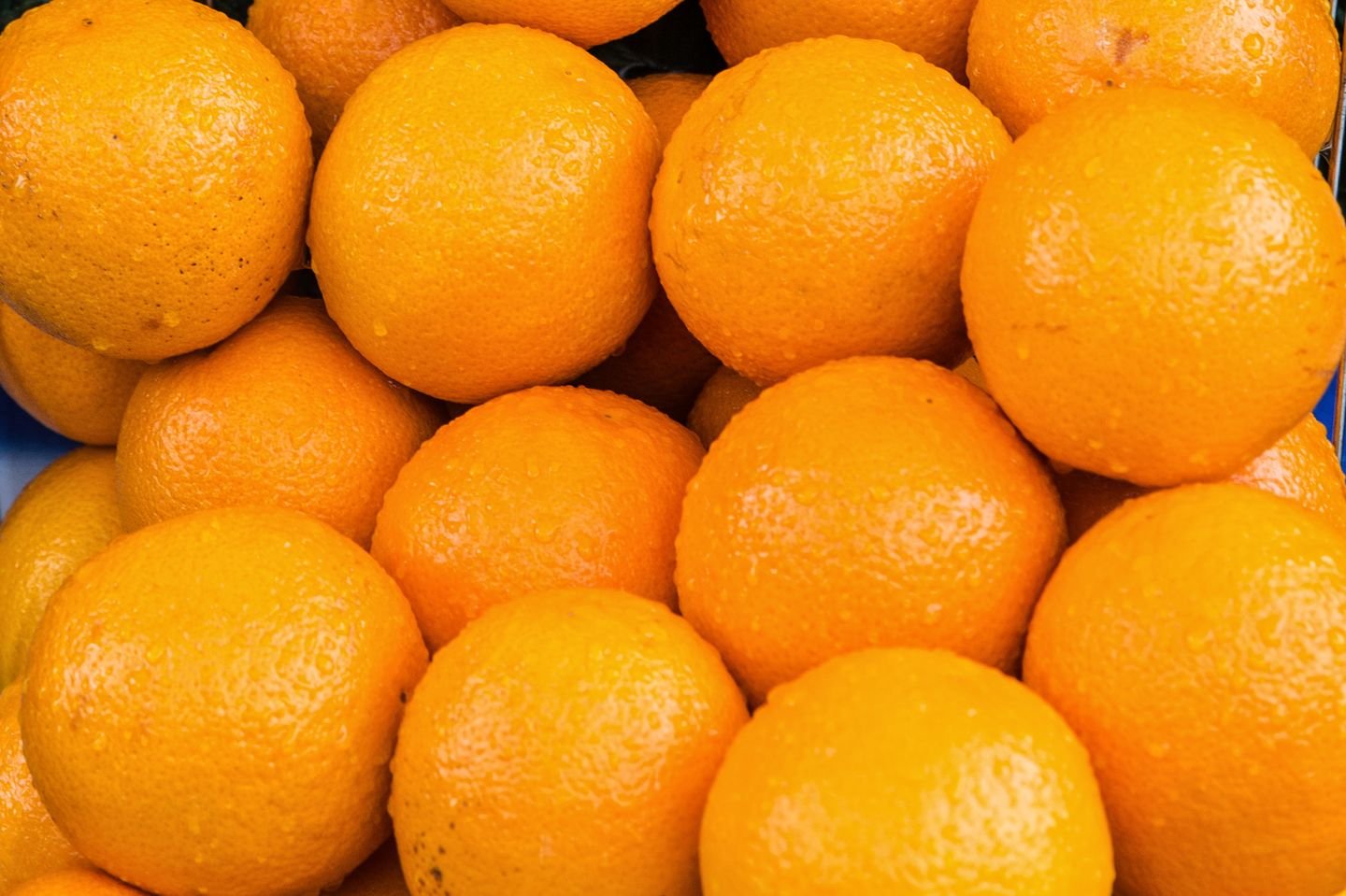
The fruit gave the colour its name, and the colour returned the favour. These similes focus on sweetness, juice and freshness, so they work beautifully for food, mornings and anything that wakes the senses.
- sweet like a ripe orange in summer
Meaning: naturally sweet, with a little sunshine in it.
Example: Grandma’s lemonade tasted sweet like a ripe orange in summer. - juicy like a freshly squeezed orange
Meaning: bursting with freshness and flavour.
Example: The gossip was juicy like a freshly squeezed orange, and nobody could stop listening. - fresh like orange zest in the morning
Meaning: bright, sharp and wide awake.
Example: The sea breeze felt fresh like orange zest in the morning. - bright like an orange segment held to the light
Meaning: glowing softly, as if lit from within.
Example: The amber bead shone bright like an orange segment held to the light. - sweet like orange blossom honey
Meaning: gentle, floral and golden.
Example: Her singing voice was sweet like orange blossom honey. - tangy like the first bite of an orange
Meaning: sharp, lively and impossible to ignore.
Example: His reply was tangy like the first bite of an orange, and the whole room laughed. - round and glowing like an orange on the tree
Meaning: plump, ripe and quietly proud.
Example: The lantern hung in the orchard, round and glowing like an orange on the tree. - fragrant like orange peel warming on a stove
Meaning: cosy, spiced and full of home.
Example: The winter kitchen smelled fragrant like orange peel warming on a stove. - golden like orange juice at breakfast
Meaning: sunny, healthy and full of morning energy.
Example: The light in the nursery turned golden like orange juice at breakfast.
Bright, Bold and Full of Energy
Finally, some oranges refuse to whisper. These bold comparisons describe things that stand out, shout for attention and lift the energy of a whole scene.
- orange like a goldfish darting in a pond
Meaning: quick, shiny and playful.
Example: The little car zipped through traffic, orange like a goldfish darting in a pond. - bright like a warning light in the fog
Meaning: impossible to miss, even in gloom.
Example: Zara’s coat stayed bright like a warning light in the fog, so we never lost her. - orange like a clownfish among the coral
Meaning: small, bold and made to be noticed.
Example: The tiny tent stood out on the white beach, orange like a clownfish among the coral. - orange like a basketball under bright lights
Meaning: sporty, round and full of bounce.
Example: The full moon over the court looked orange like a basketball under bright lights. - glowing like paper lanterns at a festival
Meaning: festive, warm and joyful in a crowd.
Example: The street market glittered, glowing like paper lanterns at a festival. - orange like a highlighter across a blank page
Meaning: the one thing the eye simply cannot skip.
Example: Marco’s name on the list jumped out, orange like a highlighter across a blank page. - vivid like a neon sign in the rain
Meaning: electric, modern and loud with colour.
Example: The shopfront burned vivid like a neon sign in the rain. - orange like a flame tree in full bloom
Meaning: a whole crown of fiery colour.
Example: From the train, the hillside tree stood orange like a flame tree in full bloom. - cheerful like a sunrise after a long night
Meaning: hopeful colour that lifts every mood.
Example: Priya’s letter arrived cheerful like a sunrise after a long night, and Tom smiled for the first time in days.
Quick Reference: 10 Orange Similes at a Glance
| Simile | Best For |
|---|---|
| orange like the sky at sunset | A classic sunset description |
| orange like a tangerine sun sinking into the sea | Seaside evenings |
| orange like dawn breaking over the hills | Hopeful mornings |
| orange like a lantern glowing at dusk | Cosy, comforting light |
| orange like clouds brushed with gold | Soft evening skies |
| orange like the last light of a summer evening | Gentle, nostalgic scenes |
| orange like a horizon on fire | Dramatic skies |
| orange like marmalade spread across the sky | Playful, cosy mornings |
| orange like the glow before the stars appear | Quiet twilight moments |
| orange like flames in a fireplace | Warm indoor scenes |
How to Use Orange Similes in Writing
Start by deciding which orange you truly mean. A sunset orange feels calm and nostalgic, while a flame orange feels hot and urgent. A fruit orange, in contrast, tastes sweet and fresh. Once the mood is clear, the right simile almost chooses itself. For example, a childhood kitchen might glow like orange juice at breakfast, whereas a sky before battle needs the stronger heat of a furnace. In other words, match the source of the colour to the feeling of the moment, and your description will always ring true.
Use one strong simile at the brightest point of your scene, then let plain words carry the rest. Too many comparisons in a row, after all, can dazzle the reader instead of guiding the eye. Above all, keep the image familiar: sunsets, bonfires and oranges are known to everyone, so your picture lands instantly. Similarly, a single well-placed simile can colour a whole paragraph that follows it. Finally, read the sentence aloud before you keep it. A good orange simile should feel warm on the tongue, never forced or cold.
Common Mistakes to Avoid with Orange Similes
1. Forgetting Whether You Mean the Colour or the Fruit
Orange is both a colour and a fruit, so a careless simile can confuse your reader. For instance, writing that a dress was sweet like an orange mixes the two ideas clumsily. The reader pauses, and the picture breaks. Fix it by signalling your meaning clearly: keep colour similes near light, sky and heat, and fruit similes near taste, smell and mornings. As a result, every comparison lands on the right sense.
2. Using Orange for Every Warm Thing
When every sunset, fire and jumper is orange, the colour stops meaning anything at all. Readers grow blind to it, however lovely the pictures are. Instead, save orange for the warmest and brightest moment in your scene. Other moments can borrow gold, amber or red. Therefore, when orange finally appears, it glows with its full power.
3. Choosing Images Readers Cannot Picture
A simile works only when the reader sees the comparison at once. Obscure fruits, rare flowers and private jokes leave most readers puzzled. In fact, a puzzled reader stops reading altogether. Fix it by choosing images from shared everyday life: sunsets, bonfires, pumpkins and the fruit itself. Of course, an unusual image can still work if you add a few clear words of context around it.
4. Mixing Two Pictures in One Simile
Sentences like “the sky was orange like a sunset made of marmalade and lava” ask readers to hold three pictures at once. Each picture fights the others, and consequently none of them lands. Keep one clear image per simile, and let it do the whole job. In short, a single strong picture always beats a crowded one.
5. Reusing the Same Sunset Simile Everywhere
Reaching for “orange like the sky at sunset” on every page makes your writing feel tired. The first use delights; the fifth use, meanwhile, barely registers. Fix it by rotating through the families in this collection: skies, fire, autumn, fruit and bold energy. Similarly, a small fresh detail can rescue an old favourite, such as naming the harbour, the hill or the season. After all, variety is what keeps a colour alive on the page.
Frequently Asked Questions
What is a simile for orange?
A simile for orange compares something orange to a familiar picture using like or as, such as “orange like the sky at sunset.” It borrows the warmth, brightness or sweetness of that picture, so readers see the colour clearly. In short, a simile turns a plain colour word into a small scene.
What is a good simile for the colour orange?
“Orange like the sky at sunset” is the classic choice because almost everyone has watched that glow. “Orange like flames in a fireplace” works better indoors, where warmth matters most. Indeed, the best choice always depends on your setting: sky for outdoors, fire for heat and fruit for sweetness.
How can I describe the fruit itself with a simile?
Compare the fruit to light, gold or morning. For example, an orange can hang “round and glowing like a small sun on the tree.” You can also describe its taste, calling a drink “sweet like a ripe orange in summer.” In addition, its smell suits cosy scenes, especially kitchens and winter evenings.
Can I use orange similes in school essays and stories?
Yes, orange similes are welcome in stories, descriptive essays and speeches. They make settings vivid and help readers feel heat, light and flavour. However, use them sparingly, one at the strongest moment, so each keeps its brightness. In formal reports, meanwhile, plain colour words are usually the safer choice.
What is the difference between a simile and a metaphor for orange?
A simile compares with like or as: “The sky was orange like a lantern.” A metaphor states the picture outright: “The sky was a lantern at dusk.” Similes are gentler and clearer for young readers. Metaphors, in contrast, sound bolder and more poetic.
How do I create my own orange simile?
First, look closely at your orange thing and name its strongest quality: heat, glow, sweetness or boldness. Then think of something famous for that quality, such as a bonfire, a sunset or the fruit itself. Finally, join the two with like or as and read the result aloud. If the picture appears instantly, your simile works.
Final Thought
Orange never sits quietly on the page. It can end a day in gold, warm a room with firelight or wake a morning with sweet juice. So choose the orange that matches your feeling, use it once and use it well, and your writing will glow long after the last line. In the end, that single warm picture is what your reader will carry away.

The PublishScales Editorial Team researches and writes clear, original guides to similes and figurative language.