
Great similes for snow falling begin with a simple truth: there is no weather quite like snowfall: the world goes quiet, the light softens, and the sky starts doing something between raining and dreaming. The Merriam-Webster definition of snow describes frozen crystals falling to earth, but no definition captures the hush that arrives with them.
That hush is exactly what a good snow simile must carry. Writers reach for these comparisons in winter poems, Christmas stories, nature essays, and any scene that needs peace you can see.

Below you will find 45 similes for snow falling in five groups — gentle falls, quiet and peaceful falls, magical falls, heavy snowfalls, and snow settling over the land — and every simile comes with a simple meaning.
Match the simile to your scene’s weather: feathers for a soft evening flurry, the snow globe for magic, and the giant sack of flour for the storm that buries the town by morning.
Snow chooses the gentle way down — for that same unhurried pace, see our similes for slow.
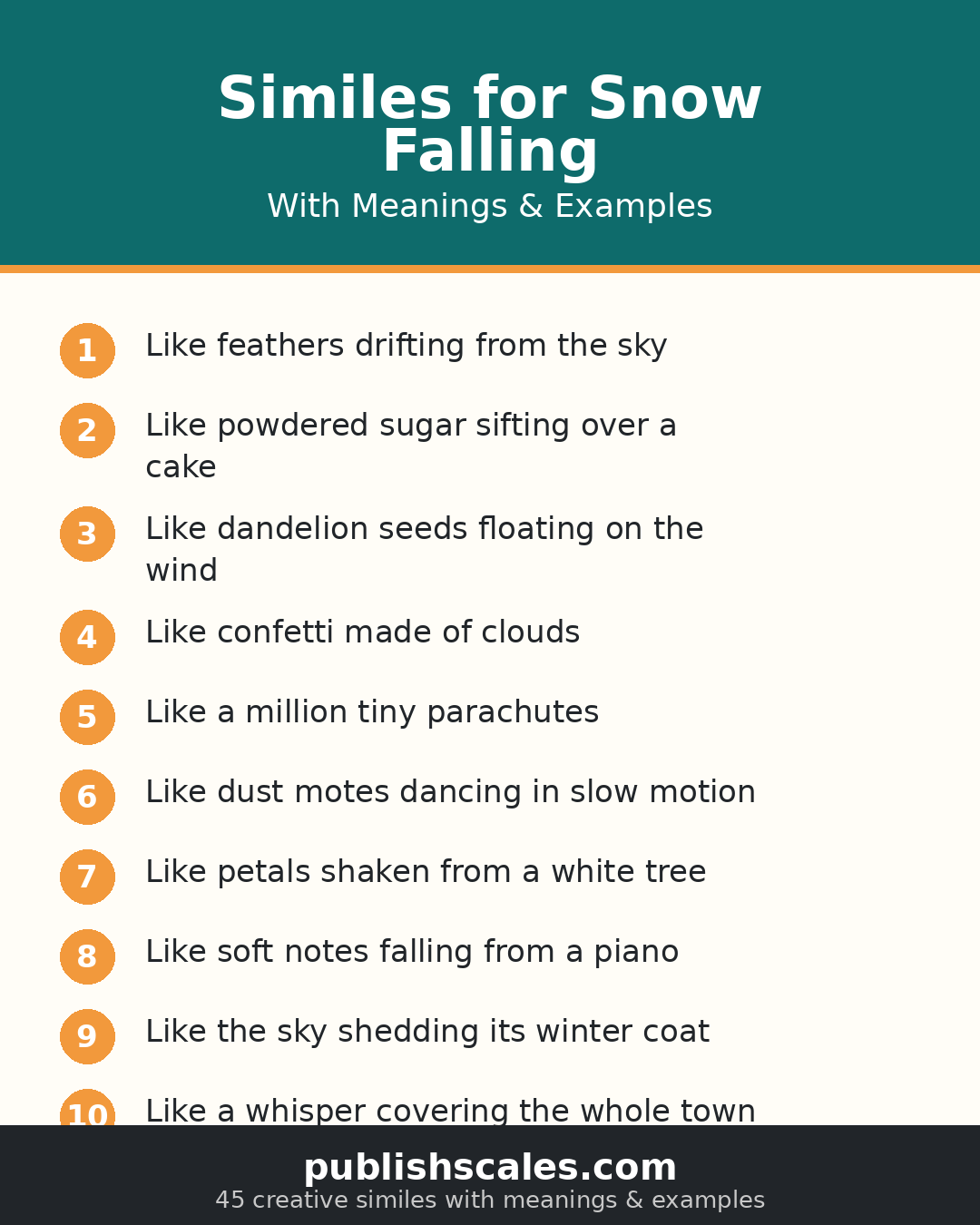
Gentle and Soft Falls
For the classic, storybook snowfall — flakes drifting down slowly enough to catch on a tongue.
Like feathers drifting from the sky
Snow falling as softly and slowly as down from a shaken pillow.
Like powdered sugar sifting over a cake
A fine, gentle snowfall dusting everything white.
Like dandelion seeds floating on the wind
Flakes wandering rather than falling, light as wishes.
Like confetti made of clouds
Playful, drifting snow that turns the air into a celebration.
Like a million tiny parachutes
Each flake floating down at its own gentle pace.
Like dust motes dancing in slow motion
Snow so light it seems to hang in the air before settling.
Like petals shaken from a white tree
Soft flakes loosened from the sky the way blossom falls in spring.
Like soft notes falling from a piano
Snow arriving gently and musically, one quiet note at a time.
Like the sky shedding its winter coat
A steady, natural release of snow from heavy clouds.
Quiet and Peaceful Falls
Snowfall’s signature is silence. These similes describe the deep calm that falls along with the flakes.
Like a whisper covering the whole town
Snowfall so quiet it feels like the landscape is being hushed.
Like a blanket being tucked around the earth
Snow settling gently and protectively over everything asleep below.
Like the world holding its breath
A stillness so complete during snowfall that nothing dares move.
Like a lullaby you can see
Falling snow with the soothing rhythm of a song for sleeping children.
Like silence made visible
The perfect phrase for snow: quiet you can actually watch falling.
Like a library where every sound is padded
Snowfall absorbing noise until the whole town feels hushed and carpeted.
Like a curtain drawn slowly over the day
Evening snowfall gently closing the world down for the night.
Like a deep sleep settling over the fields
Snow and stillness arriving together like rest for the land.
Like time itself slowing down
The dreamy pace of a soft snowfall, where hurry becomes impossible.
Magical and Beautiful Falls
For Christmas cards, fairy tales, and every writer who has ever stood at a window and sighed.
Like stars deciding to visit the earth
Snowflakes as fallen stars, bringing a little of the sky’s sparkle down.
Like diamonds sprinkled from an open hand
Snow glittering as it falls through light.
Like a snow globe shaken by a giant
The whole town inside a swirling, magical winter scene.
Like fairy dust over a sleeping village
A dusting of snow with unmistakable storybook magic.
Like lace being woven in the air
Intricate flakes creating delicate patterns as they fall.
Like tiny ballerinas in white tutus
Flakes twirling and dancing their way down.
Like the sky writing poetry in white ink
Snowfall as beautiful, fleeting artwork from above.
Like Christmas arriving one flake at a time
The festive feeling building gently with every flake.
Like a dream the clouds are having
Snow so unreal and lovely it belongs to sleep.
Cold and Heavy Snowfalls
Not all snow is gentle. These similes serve blizzards, whiteouts, and the nights the town disappears.
Like flour poured from a giant sack
Thick, fast snow falling in overwhelming quantity.
Like a white waterfall with no sound
A heavy fall pouring down — with snowfall’s eerie silence kept intact.
Like the sky emptying a thousand pillows
A storm of feathers’ worth of snow dumped all at once.
Like rain that forgot how to hurry
Dense snow with rain’s numbers but none of its speed.
Like a beaded curtain of ice
Snow falling so thick the air becomes a hanging screen.
Like sand falling through a giant hourglass
Relentless, steady, heavy snowfall that measures out the storm.
Like a flock of white birds with nowhere to land
Wind-whipped flakes circling and searching in a blizzard.
Like a blizzard of shredded paper
Chaotic, swirling snow torn around by the wind.
Like the world being erased and redrawn white
A storm so complete that the landscape is wiped and rewritten.
Snow Landing and Covering
The fall is only half the story — these similes describe what snow does when it arrives.
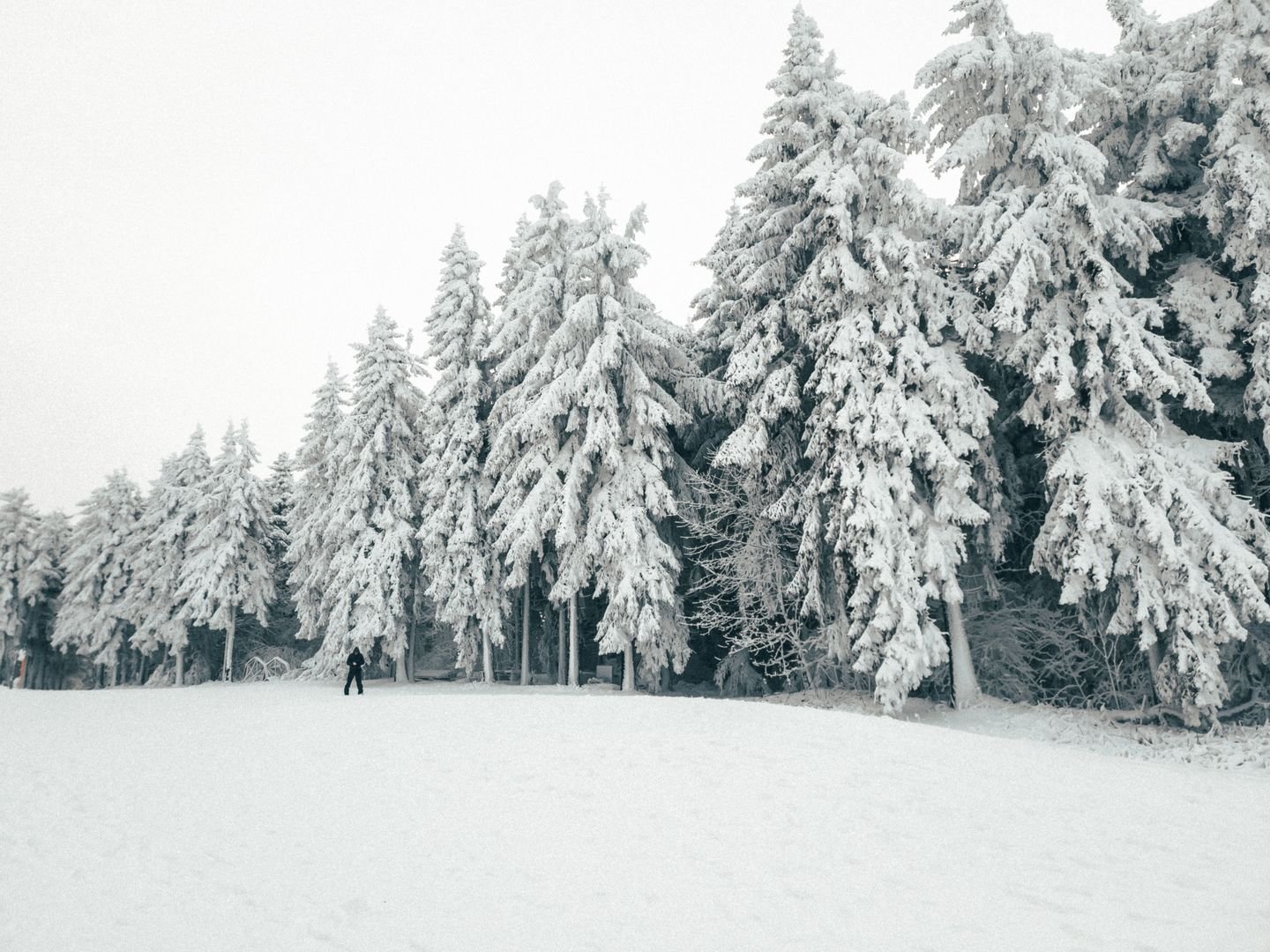
Like icing spreading over a cake
Snow coating rooftops and hills in a smooth white layer.
Like a painter whitewashing the whole town
Snow repainting every surface the same clean color.
Like powdered sugar on a chocolate roof
A light dusting darkened roofs turned delicious-looking.
Like a clean page laid over yesterday
Fresh snow erasing footprints and starting the world over.
Like a quilt stitched overnight
Snow arriving silently while everyone slept, covering everything evenly.
Like foam settling on a shore
Snow gathering in soft white edges along walls and fences.
Like a magician’s cloth hiding the landscape
Snow concealing the familiar world beneath a white sheet.
Like white paint spilled across a map
Snow spreading over the countryside in irregular white patches.
Like a ghost’s tablecloth over the fields
A pale, silent covering that makes farmland look haunted and still.
Quick Reference: Similes for Snow Falling at a Glance
These ten are the fluffiest and most quoted of the collection — winter writing essentials:
| Simile | Best For |
|---|---|
| Feathers | The classic gentle fall, soft and slow. |
| Powdered sugar | A fine dusting over everything. |
| Snow globe | Instant storybook magic. |
| Tucked blanket | Snow as comfort and protection. |
| Visible silence | Snowfall’s famous hush, made poetic. |
| Fairy dust | A magical dusting over a sleeping world. |
| White ink poetry | Snow as the sky’s beautiful writing. |
| Pillow fight in the sky | A heavy, joyful dump of snow. |
| Icing on a cake | Snow coating roofs and hills smoothly. |
| Clean page | Fresh snow erasing yesterday completely. |
How to Use Snow Falling Similes in Writing
In poems, snow similes reward sound-matching: gentle similes (feathers, whispers, lullabies) belong with soft words and short lines, so the poem itself feels hushed. For a storm scene, switch families entirely — sacks of flour, hourglasses, erasers — and let your sentences lengthen and pile up the way the snow does.
In stories, use snowfall to change a scene’s emotional temperature: the same street feels romantic under ballerinas and fairy dust, lonely under a ghost’s tablecloth, and dangerous inside a beaded curtain of ice. One well-placed snow simile at a chapter’s turning point can do the work of a whole paragraph of mood-setting.
Common Mistakes to Avoid with Snow Falling Similes
Reaching for rain similes
Rain is fast, loud, and vertical; snow is slow, silent, and wandering. A snow scene written with rain images will feel wrong to every reader who has seen real snow.
Making all snow Christmas snow
Snow falls in bleak January and dangerous March too. Fairy dust and ballerinas belong to festive scenes; a frozen, lonely scene needs the curtain, the quilt, or the ghost’s tablecloth.
Repeating feathers in every paragraph
Feathers are the most-used snow image in English. Keep them once, then rotate: sugar, lace, stars, pages.
Forgetting the silence
Soundlessness is snowfall’s signature trait. If your simile could describe noisy weather just as well, it is not really about snow.
Using blizzard images for a gentle flurry
A few flakes outside a window are not an emptied sack of flour. Match the simile’s weight to the storm’s actual strength or the scene inflates into comedy.
Frequently Asked Questions
What are the best similes for snow falling?
The most loved are “like feathers drifting from the sky” for gentle falls, “like silence made visible” for the famous hush, and “like a snow globe shaken by a giant” for pure magic.
What is a good snow simile for a poem?
Try: “The snow came down like the sky writing poetry in white ink — beautiful, and gone if you reached to touch it.” It gives a poem both image and feeling.
How do I describe a heavy snowfall in writing?
Use quantity and force: flour from a giant sack, sand through an hourglass, the world erased and redrawn. Keep one eerie detail — the silence — so it stays snow and not rain.
What are snow similes for kids’ writing?
Feathers, powdered sugar on a cake, a snow globe, and Christmas arriving one flake at a time are the friendliest: familiar, drawable, and easy to explain in one sentence.
How is falling snow different from fallen snow in similes?
Falling snow is about motion and mood — drifting, dancing, whispering. Fallen snow is about covering — blankets, icing, quilts, clean pages. Choose the family that matches whether your scene watches the sky or the ground.
What simile describes snow at night?
“Like stars deciding to visit the earth” and “like a curtain drawn slowly over the day” both suit nightfall snow — one for sparkle in lamplight, one for the world closing down.
Final Thought
Snow falling is the sky’s quietest handwriting, and the right simile lets your reader hear the hush between the words. Whether your flakes arrive as feathers, fairy dust, or a giant’s shaken snow globe, choose the image that matches your scene’s heart — and let it snow.

The PublishScales Editorial Team researches and writes clear, original guides to similes and figurative language.


