Writers often need a character who wants too much, yet the word greedy alone can feel flat. A sharp simile turns that hunger into a clear picture. For example, a miser grows vivid beside a dragon guarding gold. Greed works like a hunger that never fills, much like the endless appetite in similes for being hungry. Readers, meanwhile, grasp the flaw through one strong comparison.
Greedy characters appear in fairy tales, novels, and school essays alike. A king may demand more land while people go hungry. Meanwhile, a child may grab every sweet on the table. Similarly, a merchant squeezes every coin from his customers. Therefore, one plain adjective rarely captures such appetite fairly.
Use these comparisons in stories, poems, essays, and character sketches. In addition, every simile below carries a clear meaning and example. Read the meaning first, then choose your image. Above all, let the comparison reveal greed instead of naming it.
What Does Greedy Mean in Writing?
A greedy person wants more than enough and still feels unsatisfied. Money, food, and power can all feed that appetite. In short, greed keeps growing after the need has passed. Writers picture it through grabbing hands and empty stomachs.
Greed also differs from healthy ambition, because ambition stops at enough. In contrast, greed treats every limit as an insult. Careful writers show what the hunger costs the character. Overall, the best picture shows the emptiness behind the grabbing.
Similes for Greed for Money and Wealth
Money gives greed its oldest pictures. The similes below suit misers, merchants, and kings.
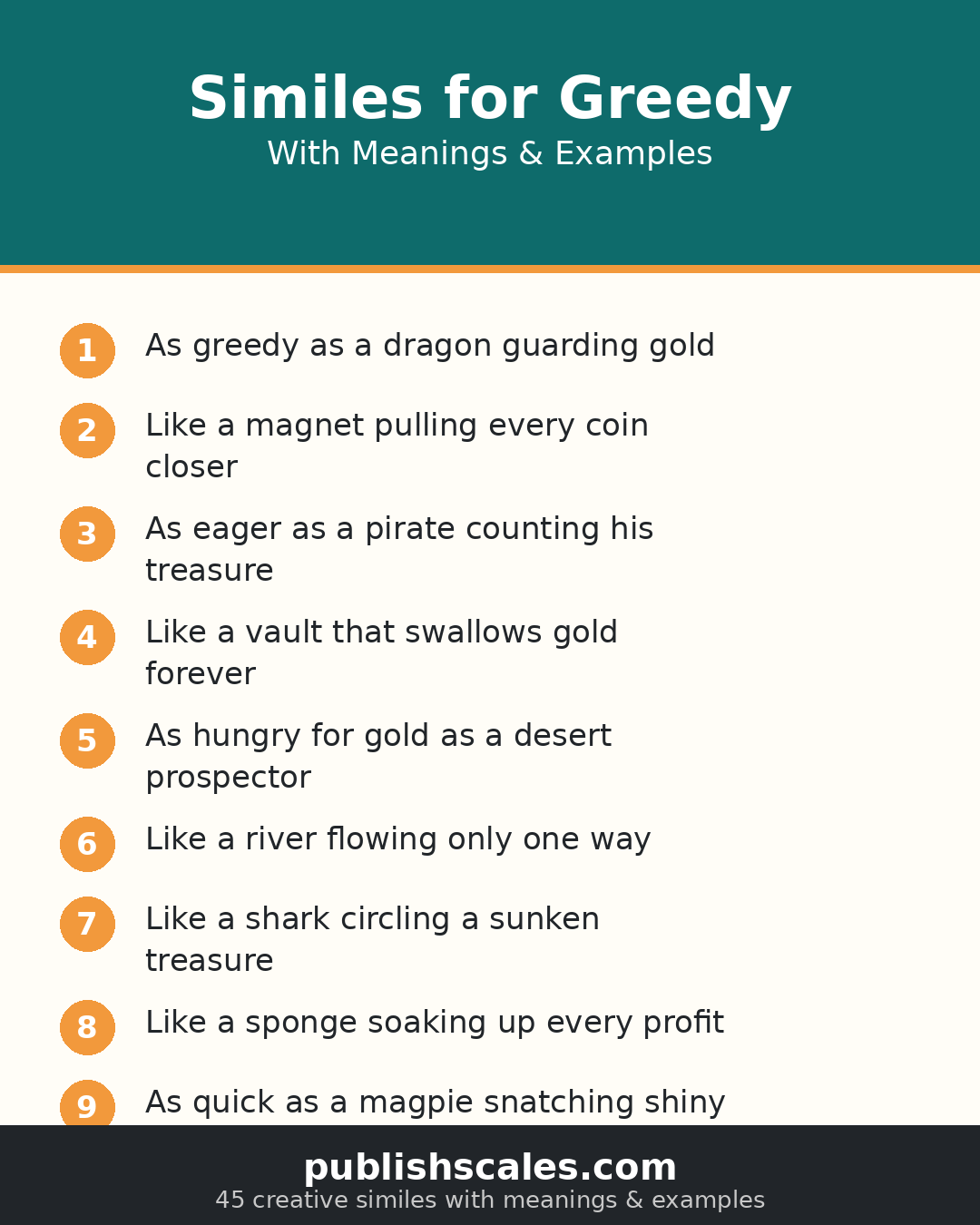
As greedy as a dragon guarding gold
Meaning: This classic image shows wealth hoarded fiercely and never enjoyed. In short, he would rather sleep on riches than spend.
Example: In fact, the old landlord sat as greedy as a dragon guarding gold.
Like a magnet pulling every coin closer
Meaning: This simile describes money drifting towards one person. Therefore, even loose change cannot escape his pockets.
Example: Meanwhile, Uncle Farid attracted fees and fines like a magnet pulling every coin.
As eager as a pirate counting his treasure
Meaning: The picture shows delight in riches mixed with fear of losing them. As a result, every coin gets counted repeatedly.
Example: After the fair, the trader grinned as eager as a pirate counting his treasure.
Like a vault that swallows gold forever
Meaning: This image presents wealth entering and never leaving again. Consequently, gifts and kindness disappear behind one locked door.
Example: In fact, his savings grew silently, like a vault that swallows gold forever.
As hungry for gold as a desert prospector
Meaning: This comparison links greed to a search that never ends. Similarly, each small success only sharpens the hunger for more.
Example: The young dealer chased bargains as hungry for gold as a desert prospector.
Like a river flowing only one way
Meaning: This simile shows money and gifts moving towards one person. Overall, nothing ever flows back to others.
Example: In short, cash moved through his business like a river flowing one way.
Like a shark circling a sunken treasure
Meaning: The image gives wealth a dangerous guardian beneath the surface. Still, the treasure itself stays useless at the bottom.
Example: The speculator watched the fallen company like a shark circling sunken treasure.
Like a sponge soaking up every profit
Meaning: This picture describes steady absorption of every gain. Above all, not one drop of earnings escapes his notice.
Example: Meanwhile, the partnership absorbed refunds and rebates like a sponge soaking up profit.
As quick as a magpie snatching shiny coins
Meaning: This simile catches greed’s speed when something valuable appears. In fact, the grab happens before anyone else can react.
Example: At the auction, she moved as quick as a magpie snatching shiny coins.
Similes for Greed for Food and Eating
Food scenes expose greed quickly, because appetite shows on faces. These similes suit feasts, buffets, and family dinners.
As greedy as a pig at the trough
Meaning: This farmyard image shows someone eating loudly, without shame. In short, table manners vanish the moment the food arrives.
Example: At the wedding feast, he ate as greedy as a pig at the trough.
Like a wolf at a feast
Meaning: This simile presents eating as wild and fiercely competitive. Therefore, every plate nearby feels suddenly unsafe.
Example: In fact, the traveller tore into dinner like a wolf at a feast.
As quick as a sparrow diving for crumbs
Meaning: The picture shows tiny, darting greed over the smallest scraps. As a result, even crumbs become worth fighting over.
Example: Meanwhile, little Sana darted, as quick as a sparrow diving for crumbs.
Like a bottomless pit at dinner
Meaning: This image describes an appetite that no course seems to satisfy. Consequently, hosts keep cooking while the guest keeps asking.
Example: Grandma joked that her grandson ate like a bottomless pit at dinner.
As eager as a dog eyeing the roast
Meaning: This simile captures fixed attention on food meant for someone else. Similarly, every glance betrays the same hopeful plan.
Example: In fact, little Bilal watched the cake as eager as a dog eyeing the roast.
Like a vacuum cleaner at a buffet
Meaning: The picture shows food disappearing steadily, plate after plate. Overall, nothing on the table survives for long.
Example: At the office lunch, Hamza moved like a vacuum cleaner at a buffet.
Like a locust swarm over a ripe field
Meaning: This image turns one appetite into a whole plague of hunger. Above all, it suggests nothing edible will remain.
Example: In short, the picnic vanished quickly, like a locust swarm over a field.
As fast as a child grabbing the last biscuit
Meaning: This simile shows speed driven by fear of missing out. Still, the prize is usually tiny and hardly worth it.
Example: Meanwhile, her hand shot out, as fast as a child grabbing the last biscuit.
Like a squirrel stuffing both cheeks full
Meaning: This picture mixes greed with comic storage for later. In fact, the eating matters less than the keeping.
Example: At the stall, he pocketed free mints like a squirrel stuffing both cheeks.

Similes for Wanting More and More
Some greed has no target and refuses to stop. The similes below capture appetite growing with every gain.
Like a fire that grows with every log
Meaning: This image shows success feeding desire instead of calming it. Therefore, each new prize becomes fuel for the next demand.
Example: In fact, his ambition spread like a fire that grows with every log.
Like a bucket with a hole in the bottom
Meaning: This simile describes gains that vanish as fast as they arrive. As a result, the owner keeps pouring and never feels rich.
Example: Her salary disappeared monthly, like a bucket with a hole in the bottom.
Like the sea drinking every river
Meaning: The picture gives greed a vast, calm, and endless thirst. Consequently, whole fortunes can pour in and still seem small.
Example: Meanwhile, the empire absorbed small kingdoms like the sea drinking rivers.
Like a snowball rolling downhill
Meaning: This image shows small wants gathering size and speed over time. Similarly, early bargains grow into unstoppable demands.
Example: In short, his collection grew like a snowball rolling downhill each year.
As hungry as a flame in dry grass
Meaning: This comparison makes desire sound fast and impossible to satisfy. Overall, everything nearby becomes material for burning.
Example: The young chief’s ambition ran as hungry as a flame in dry grass.
Like a well that never fills
Meaning: This simile suits people whose needs stay empty despite constant supply. Still, they return daily with rope and bucket.
Example: In fact, her wants returned daily, like a well that never fills.
As grasping as ivy over a garden wall
Meaning: The picture shows quiet greed spreading over everything within reach. Above all, it takes space that was never offered freely.
Example: Meanwhile, the company expanded, as grasping as ivy over a garden wall.
As eager as a collector missing one coin
Meaning: This image focuses greed into a single missing piece. In short, ninety-nine prizes cannot calm the want for one.
Example: He hunted the rare stamp as eager as a collector missing one coin.
Like a toddler reaching for one more sweet
Meaning: This simile gives adult greed a childish, familiar shape. Consequently, the wanting looks both funny and faintly sad.
Example: At the counter, he pleaded like a toddler reaching for one more sweet.
Similes for Greedy People, Misers and Hoarders
Hoarders reveal greed through keeping, not grabbing. These similes suit misers and collectors who cannot let go.
As tight-fisted as a miser counting pennies
Meaning: This classic image shows hands closed around money always. In short, spending even small change feels physically painful.
Example: In fact, the shopkeeper stayed as tight-fisted as a miser counting pennies.
Like a squirrel hoarding nuts for ten winters
Meaning: This picture turns caution into endless, anxious storage. Therefore, cupboards fill while the owner still fears shortage.
Example: Auntie stored tins and rice like a squirrel hoarding nuts for winter.
Like a pack rat in a crowded burrow
Meaning: This simile describes someone collecting useless things with real devotion. As a result, drawers hide string, buttons, and broken tools.
Example: Meanwhile, old Rafi collected junk like a pack rat in a crowded burrow.
As guarded as a vault with no key
Meaning: The image presents possessions locked away from every possible hand. Consequently, even the owner barely enjoys what he keeps.
Example: In short, her jewellery stayed as guarded as a vault with no key.
Like a spider at the centre of its web
Meaning: This picture shows a keeper waiting calmly while things drift in. Similarly, nothing enters the web without his knowledge.
Example: The landlord sat among his files like a spider at its web’s centre.
As silent as an attic stuffed with boxes
Meaning: This simile links hoarding with secrecy and dusty stillness. Overall, the collection speaks about fear rather than wealth.
Example: In fact, the back room sat as silent as an attic stuffed with boxes.
As generous as a locked treasure chest
Meaning: This ironic image praises generosity that clearly does not exist. Above all, it suits teasing descriptions among friends.
Example: When the bill arrived, he turned as generous as a locked treasure chest.
Like a guard dog over an empty bowl
Meaning: This picture shows fierce protection of something almost worthless. Still, the fierceness itself reveals the depth of greed.
Example: Meanwhile, she defended her parking spot like a guard dog over a bowl.
Like a hen sitting on a golden egg
Meaning: This simile shows someone refusing to move, share, or spend. In fact, the treasure stays guarded and completely unused.
Example: For years, he guarded the plot like a hen sitting on a golden egg.
Similes for Funny and Exaggerated Greed
Greed also invites laughter when writers exaggerate it. These playful similes suit comics and light-hearted stories.
Like a cartoon villain rubbing his hands
Meaning: This image turns greed into pure theatre for young readers. In short, everyone can spot the plan before it starts.
Example: In fact, little Omar plotted his snack raid like a cartoon villain.
As greedy as a kid in a free sweet shop
Meaning: This simile captures joy and greed exploding at the same moment. Therefore, pockets and mouth fill at once.
Example: At the giveaway, young Zara acted as greedy as a kid in a sweet shop.
As possessive as a seagull with one chip
Meaning: The picture mocks fierce ownership of something tiny and greasy. As a result, the smaller the prize, the funnier the defence.
Example: Meanwhile, he guarded one fry as possessive as a seagull with a chip.
Like a vacuum cleaner chasing party snacks
Meaning: This comic image shows snacks vanishing the moment they appear. Consequently, hosts learn to serve his plate last.
Example: In short, cousin Daniyal circled the table like a vacuum cleaner chasing snacks.
As dramatic as a pirate dividing one coin
Meaning: This simile jokes about grand ceremony over a tiny reward. Similarly, the smaller the share, the louder the speeches.
Example: The brothers split one discount voucher as dramatic as pirates dividing coins.
Like a dog burying bones in every garden
Meaning: This picture shows cheerful greed spread across the neighbourhood. Overall, every hiding place holds somebody else’s property.
Example: In fact, she stashed office biscuits like a dog burying bones everywhere.
As serious as a cat guarding the treat jar
Meaning: This image gives tiny greed a stern, official expression. Still, the solemn face only makes the scene funnier.
Example: Grandpa watched the biscuit tin as serious as a cat guarding treats.
Like a shopper wrestling for the last sale shoe
Meaning: This simile turns bargain hunting into full-contact sport. Above all, victory matters far more than the shoe itself.
Example: Meanwhile, two aunties wrestled, like shoppers fighting for last sale shoes.
As shameless as a pigeon stealing your lunch
Meaning: This closing image shows bold greed performed in broad daylight. In fact, the thief expects applause rather than punishment.
Example: At the park, the monkey grabbed sandwiches, as shameless as a pigeon stealing lunch.
Quick Comparison Table
The table below matches nine greedy similes to their best uses and tones.
| Simile | Best For | Tone |
|---|---|---|
| As greedy as a dragon guarding gold | Hoarded wealth | Fierce |
| As greedy as a pig at the trough | Eating scenes | Rude |
| Like a fire that grows with every log | Growing ambition | Intense |
| As tight-fisted as a miser counting pennies | Classic misers | Stern |
| Like a bottomless pit at dinner | Endless appetites | Playful |
| Like a bucket with a hole in the bottom | Money that vanishes | Sad |
| As generous as a locked treasure chest | Ironic teasing | Sarcastic |
| Like a squirrel hoarding nuts for ten winters | Anxious savers | Gentle |
| As possessive as a seagull with one chip | Tiny prizes | Comic |

How to Use Greedy Similes in Writing
Match the Simile to the Kind of Greed
Greed wears many faces, from quiet hoarding to loud grabbing at dinner. A dragon suits wealth, while a pig at the trough suits table manners. Therefore, choose the picture that matches the exact appetite on the page. Readers then feel the flaw precisely, not a vague fault. In short, precision makes the warning land properly.
Show Greed Through Small Actions
Tiny actions reveal greed more honestly than speeches. A hand covering the last biscuit tells readers everything. Similarly, eyes following every coin betray the same hunger quietly. Writers should therefore plant small, greedy gestures inside ordinary scenes. In short, behaviour convinces readers faster than labels do. Above all, one honest detail beats a full paragraph of telling.
Let Other Characters React
Reactions around a greedy character quietly measure how bad the flaw is. A sister rolling her eyes makes grabbing feel truly selfish. Meanwhile, servants whispering about a miser deepen the portrait without direct comment. Writers can therefore borrow the room’s judgement instead of narrating. As a result, the greed feels social, visible, and real.
Use Funny Greed Carefully
Comic greed works best when the exaggeration stays kind and clearly playful. A seagull guarding one chip makes readers smile without cruelty. In contrast, mocking a poor character’s hunger can sour the whole scene quickly. Writers should therefore aim jokes at behaviour, never at real suffering. Overall, gentle humour keeps even greedy characters strangely likeable.
Save the Strongest Simile for the Climax
A greedy character reveals the worst appetite at the turning point. Early scenes can use mild images, like a squirrel storing food. Meanwhile, the climax deserves the dragon, the fire, or the bottomless pit. Saving the strongest picture builds pressure scene by scene. Finally, the reader feels the greed peak exactly when the plot does.
Common Mistakes to Avoid with Greedy Similes
Calling Every Selfish Act Greedy
Selfishness and greed overlap, yet they are not the same flaw. A child refusing to share one toy is selfish for a single moment. In contrast, greed means wanting more and more, far beyond any need. Writers blur characters when every small meanness becomes greed. Therefore, save greedy similes for appetites that never feel satisfied.
Stacking Too Many Greedy Images
One strong picture of greed can carry an entire scene. Three dragons and a wolf in one paragraph simply cancel out. As a result, readers stop picturing anything and start skimming instead. Writers should therefore choose the single sharpest image for each moment. In short, restraint makes the remaining simile feel twice as powerful.
Making Greed Sound Admirable by Accident
Some greedy images accidentally flatter the character instead of criticising the flaw. A lion or a king can sound noble even while grabbing everything. Meanwhile, the writer may intend clear condemnation of the appetite. Careful writers test whether the picture sounds proud or pathetic. Overall, dragons hoard foolishly, and that foolishness should stay visible.
Forgetting the Cost of Greed
Greed always charges somebody, whether the character notices or not. A miser may keep every coin and still lose every friend. Similarly, a feast-grabber gains one plate and loses everyone’s respect. Writers weaken their scenes when greed appears completely free of consequences. Above all, showing the price makes the flaw feel real and human.
Using the Same Dragon for Every Character
The dragon guarding gold is famous, so readers have seen it countless times. School essays repeat it until the picture stops surprising anyone. Instead, writers can twist it or invent fresher comparisons. A guard dog over a parking space may suit a modern miser better. Finally, original images make your greedy character impossible to confuse with others.

Frequently Asked Questions
What is a simile for greedy?
A simile for greedy compares a grasping person with a familiar picture. For example, a miser may guard money like a dragon guarding gold. Such images show hunger instead of naming it.
What is the most famous simile for greed?
The dragon guarding gold is probably the most famous greed image. Fairy tales, poems, and films have repeated it for centuries. In addition, the miser counting pennies remains a close second.
How do I describe a greedy character without saying greedy?
Show the character grabbing, hiding, or counting things others need. Then add one matching simile, like a squirrel hoarding nuts. As a result, readers judge the behaviour themselves without any label.
Can greedy similes be funny?
Yes, exaggerated greed often suits comedy and light stories. A seagull guarding one chip or a pigeon stealing lunch makes readers laugh. In short, humour works when the joke targets behaviour rather than poverty.
What is the difference between greedy and selfish similes?
Selfish similes describe refusing to share what someone already has. Greedy similes, in contrast, describe wanting more beyond every need. In fact, a character can be selfish for a minute but greedy for a lifetime.
How many greedy similes should a story use?
Usually, one strong simile can define a character’s greed for several chapters. A second image nearby weakens both pictures at once. Finally, save fresh comparisons for moments when appetite grows.
Final Thought
Greed becomes unforgettable when a picture shows the grabbing and the emptiness. Dragons, troughs, and leaking buckets reveal the same hollow centre. In the end, readers remember characters whose hunger we can actually see.
Start with one honest action, like a hand hovering over the last slice. Then let your simile stretch that moment until the character appears.

The PublishScales Editorial Team researches and writes clear, original guides to similes and figurative language.