
Writers describe fear, love, and excitement through many body signals, yet none speaks louder than a pounding heart. The word pounding suggests a beat so strong it shakes the whole chest. For example, a hero hears a noise downstairs and freezes. His heart reacts long before his mind catches up. Such moments pair naturally with similes for being shocked, because a pounding heart is the body’s first answer to shock.
A pounding heart appears in ghost stories, love scenes, chase scenes, and exam essays alike. A soldier waits in silence before the attack. Meanwhile, a bride walks towards the altar on trembling legs. Therefore, one flat phrase like “his heart beat fast” rarely satisfies readers.
Use these comparisons in stories, poems, essays, and dramatic scenes. In addition, each simile below carries a clear meaning and example. Read the meaning first, then choose the image matching your moment. Above all, let the beat show the emotion instead of naming it.
What Does a Pounding Heart Mean in Writing?
A pounding heart means the heart beats faster and harder than normal. Fear, love, effort, and excitement can all trigger that response. In short, the body prepares for action before the character decides anything. Writers use it to reveal feelings characters might hide.
A calm scene, meanwhile, keeps the heartbeat slow and easy to ignore. In contrast, a pounding heart refuses to stay hidden. It thumps against the ribs, demanding attention. Overall, few body signals create tension so quickly.
Similes for a Heart Pounding with Fear and Fright
Fear turns the heartbeat into the loudest sound in the room. The similes below suit ghost stories, dark corridors, and pure panic.
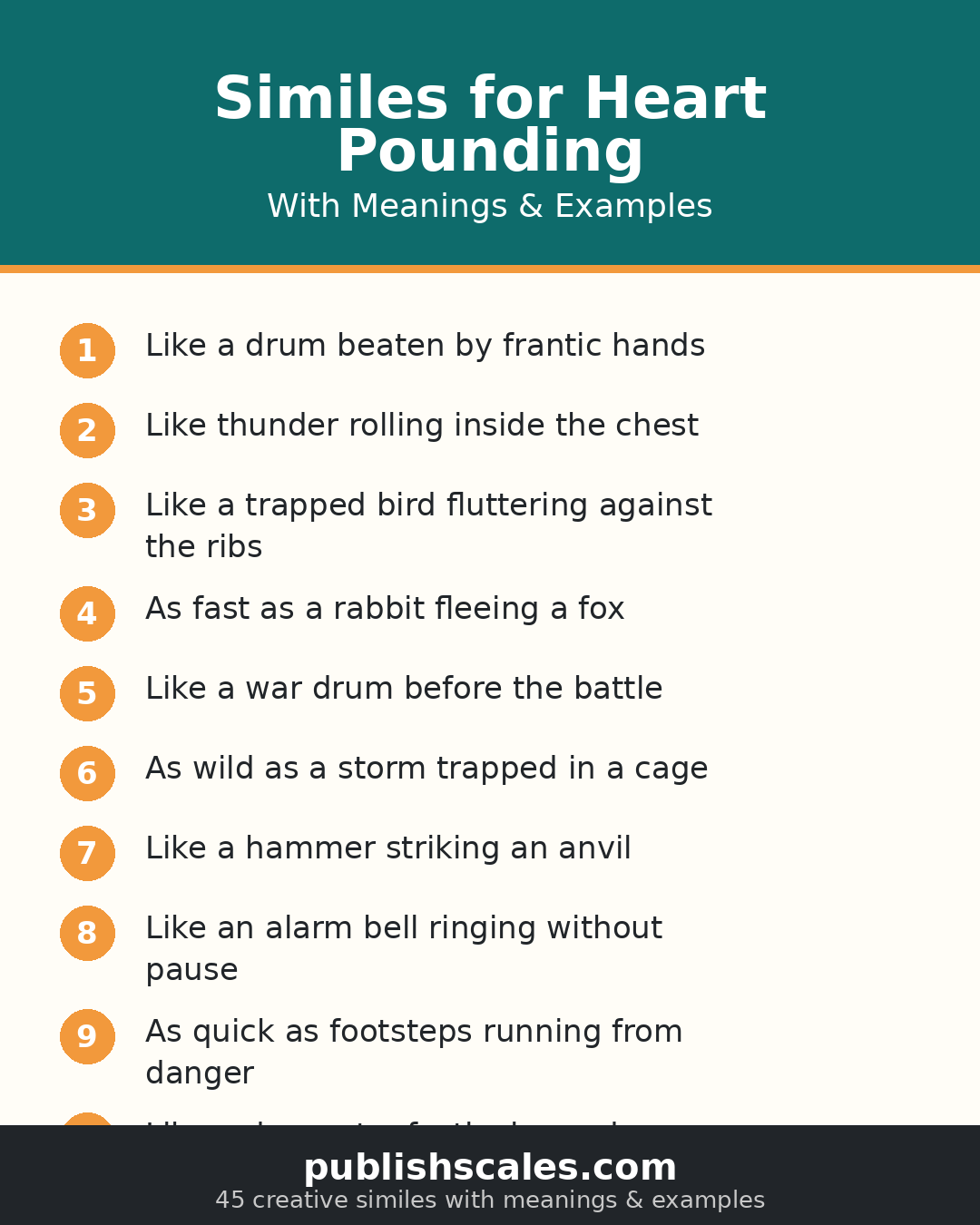
Like a drum beaten by frantic hands
Meaning: This simile compares the heartbeat to wild, uneven drumming. In short, panic controls the body.
Example: When the lights failed, her heart pounded like a drum beaten by frantic hands.
Like thunder rolling inside the chest
Meaning: This image gives the heartbeat a deep, echoing boom. As a result, fear feels enormous and close.
Example: In fact, his heart pounded like thunder rolling inside the chest.
Like a trapped bird fluttering against the ribs
Meaning: This comparison shows a heartbeat feeling light, quick, and desperate. Similarly, the character feels caged.
Example: Meanwhile, her heart fluttered like a trapped bird against her ribs.
As fast as a rabbit fleeing a fox
Meaning: The image presents speed driven by pure survival instinct. In fact, the body wants to run.
Example: When the dog lunged, Tom’s heart raced like a rabbit fleeing a fox.
Like a war drum before the battle
Meaning: This simile gives fear a steady, ominous rhythm. Therefore, readers sense the coming fight.
Example: Before the door opened, his heart beat like a war drum before the battle.
As wild as a storm trapped in a cage
Meaning: This comparison mixes frantic energy with helpless confinement. Above all, the heartbeat feels too big.
Example: Trapped in the lift, her heart hammered as wild as a storm trapped in a cage.
Like a hammer striking an anvil
Meaning: The blows here feel heavy, hard, and painfully regular. Consequently, each beat strikes from inside.
Example: Each footstep behind him made his heart pound like a hammer striking an anvil.
Like an alarm bell ringing without pause
Meaning: This simile presents the heart as a warning signal refusing to stop. Still, nobody can silence it.
Example: Throughout the interview, his heart rang like an alarm bell ringing without pause.
As quick as footsteps running from danger
Meaning: The heartbeat here copies the pace of someone fleeing. As a result, every beat feels urgent.
Example: Finally, her heart drummed as quick as footsteps running from danger.
Similes for a Heart Pounding with Excitement and Joy
Joy makes the same heartbeat feel bright and full of life. These similes suit celebrations, surprises, victories, and good news.
Like a drum at a festival parade
Meaning: This simile turns the heartbeat into cheerful dancing music. In fact, the excitement feels impossible to hide.
Example: At the announcement, Aisha’s heart drummed like a drum at a festival parade.
As lively as popcorn popping in a pan
Meaning: This image gives the heartbeat a jumpy, delightful energy. Similarly, surprises burst one after another.
Example: Meanwhile, the children’s hearts popped as lively as popcorn popping in a pan.
Like a song building towards its chorus
Meaning: This comparison shows excitement rising towards one joyful peak. Therefore, the beat strengthens steadily.
Example: As the results loaded, his heart rose like a song building towards its chorus.
Like a kite tugging at its string
Meaning: The heart here feels light, lifted, and eager to soar. Above all, joy might carry the character away.
Example: Seeing the plane tickets, her heart pulled like a kite tugging at its string.
As quick as a child’s feet on Christmas morning
Meaning: This simile mixes speed with pure, innocent anticipation. In short, the heart cannot wait.
Example: In fact, his heart pattered as quick as a child’s feet on Christmas morning.
Like a bass speaker thumping at a concert
Meaning: This image makes excitement feel deep, physical, and shared. Consequently, the whole body vibrates.
Example: At the winning goal, his heart thumped like a bass speaker thumping at a concert.
Like a drumroll before wonderful news
Meaning: A drumroll builds suspense, yet the ending promises delight. As a result, the heartbeat celebrates early.
Example: Waiting for the envelope, her heart rolled like a drumroll before wonderful news.
Like bubbles racing up a fizzy drink
Meaning: This comparison gives joy a sparkling, rising motion. Overall, happiness fizzes through the chest.
Example: Giggling, she felt her heart fizz like bubbles racing up a fizzy drink.
Like a cheer rising inside a stadium
Meaning: This simile makes private excitement feel like public celebration. Finally, the heart celebrates its own victory.
Example: When the letter arrived, his heart swelled like a cheer rising inside a stadium.

Similes for a Heart Pounding in Love and Attraction
Love makes the heartbeat quick, warm, and impossible to control. The similes below suit first meetings, confessions, weddings, and longing.
Like a drum whenever she entered the room
Meaning: This simile ties the heartbeat to one person’s presence. In short, the body announces unspoken feelings.
Example: Every afternoon, Daniel’s heart beat like a drum whenever she entered the room.
As soft and quick as a hummingbird’s wings
Meaning: This image gives young love a delicate, fluttering quality. Similarly, the feeling seems too light to hold.
Example: Meanwhile, her heart beat as soft and quick as a hummingbird’s wings.
Like a secret knocking to get out
Meaning: This comparison presents hidden feelings pressing against the chest. Therefore, every beat risks revealing truth.
Example: Beside her at the fair, his heart knocked like a secret knocking to get out.
Like a slow drum in a wedding march
Meaning: The rhythm here feels proud, steady, and deeply emotional. Above all, it celebrates a promised future.
Example: Walking down the aisle, her heart drummed like a slow drum in a wedding march.
Like a poem reciting itself in his chest
Meaning: This simile turns the heartbeat into love poetry forming alone. In fact, feelings arrive before words.
Example: Reading her letter, he felt his heart like a poem reciting itself in his chest.
Like a candle flame dancing in the wind
Meaning: This image shows a heartbeat trembling with hope and tenderness. In contrast, one wrong word could disturb it.
Example: Reaching for her hand, his heart flickered like a candle flame dancing in the wind.
Like a shy drum hiding behind a curtain
Meaning: The beat here stays muffled because feelings remain unspoken. Consequently, readers sense love fearing discovery.
Example: In short, her heart beat like a shy drum hiding behind a curtain.
As loud as a love song turned up high
Meaning: This simile makes attraction feel bold and impossible to lower. As a result, everyone seems to hear it.
Example: Dancing together at last, his heart sang as loud as a love song turned up high.
Like a drum answering another drum far away
Meaning: This comparison suggests two hearts responding across distance. Overall, it suits separated lovers and reunions.
Example: Finally, her heart answered like a drum answering another drum far away.
Similes for a Heart Pounding in Danger, Chases and Effort
Danger pushes the heartbeat to its hardest and fastest work. These similes suit chases, escapes, races, rescues, and desperate effort.
Like a drum on the final sprint
Meaning: This simile links the heartbeat to a race’s final burst. In short, the body spends everything left.
Example: Rounding the last corner, her heart pounded like a drum on the final sprint.
As hard as a boxer’s fists on a heavy bag
Meaning: This image gives each beat force, weight, and relentless repetition. Consequently, the chest feels like the target.
Example: Climbing the burning stairs, his heart struck as hard as a boxer’s fists on a heavy bag.
Like an engine revving at full speed
Meaning: This comparison presents the heart as machinery near its limit. Therefore, readers expect speed and breakdown.
Example: Meanwhile, the driver’s heart roared like an engine revving at full speed.
As fast as a galloping horse
Meaning: The heartbeat here copies hooves striking ground in full flight. As a result, the scene gains momentum.
Example: Across the dark field, his heart raced as fast as a galloping horse.
Like a piston driving a steam train
Meaning: This simile gives effort a mechanical rhythm of power and pressure. In fact, each beat pushes forward.
Example: Hauling the rope upward, her heart worked like a piston driving a steam train.
As relentless as waves crashing on rocks
Meaning: This image shows beats arriving again and again without pause. Still, the character must endure them.
Example: Swimming against the current, his heart pounded, as relentless as waves crashing on rocks.
Like a countdown drum before the leap
Meaning: This comparison builds unbearable tension seconds before action. Above all, the final beat promises triumph or disaster.
Example: On the cliff edge, her heart beat like a countdown drum before the leap.
Like a war drum urging soldiers forward
Meaning: This simile turns the heartbeat into an irresistible command. Similarly, fear and duty drive the character onwards.
Example: Charging through the smoke, his heart drummed like a war drum urging soldiers forward.
As heavy as a sledgehammer on stone
Meaning: The beats here feel slow, crushing, and exhausting rather than quick. Overall, effort weighs down the chest.
Example: Finally, after the tenth flight, his heart struck as heavy as a sledgehammer on stone.
Similes for Funny and Exaggerated Heart Pounding
Sometimes a pounding heart deserves laughter rather than sympathy. These playful similes exaggerate the beat for comedy and light-hearted scenes.
Like a drum solo nobody asked for
Meaning: This joke compares the heartbeat to an endless, unwanted performance. In short, the character wants silence.
Example: Facing the exam paper, his heart performed like a drum solo nobody asked for.
As loud as a washing machine on spin cycle
Meaning: This image makes the heartbeat sound rattling, wobbly, and graceless. Consequently, nervousness becomes funny, not frightening.
Example: Meanwhile, her heart rattled as loud as a washing machine on spin cycle.
Like a cartoon heart leaping out of his chest
Meaning: This simile borrows the classic cartoon picture of love or shock. As a result, readers picture the animation.
Example: Seeing his crush wave, Ben’s heart leapt like a cartoon heart from his chest.
Like a drumroll for a very small announcement
Meaning: The humour here comes from huge suspense for something trivial. In fact, tiny moments receive grand ceremonies.
Example: Waiting for the toast, her heart rolled like a drumroll for a very small announcement.
Like a phone buzzing inside his ribs
Meaning: This comparison makes the heartbeat feel jittery, modern, and mechanical. Similarly, the character vibrates with nerves.
Example: In fact, before the speech, his heart vibrated like a phone buzzing inside his ribs.
As fast as a squirrel after three espressos
Meaning: This silly image gives nervous energy a caffeine-fuelled speed. Above all, the exaggeration invites laughter.
Example: After the horror film, Maya’s heart raced as fast as a squirrel after three espressos.
Like a drum kit falling down the stairs
Meaning: The beats here sound chaotic, crashing, and completely rhythmless. Therefore, the panic feels clumsy, not graceful.
Example: Startled by the balloon, his heart clattered like a drum kit falling down the stairs.
Like a bass drum in a one-man marching band
Meaning: This simile pictures one person producing an entire parade’s noise. Overall, the nerves seem impossible to miss.
Example: Still, walking past the principal, his heart boomed like a bass drum in a one-man marching band.
As wild as a toddler banging pots and pans
Meaning: This comparison turns the heartbeat into joyful, tuneless kitchen chaos. Finally, the scene ends in laughter.
Example: Hiding during the game, their hearts banged as wild as a toddler banging pots and pans.
Quick Comparison Table
The table below matches nine favourite heart pounding similes to their best uses and tones.
| Simile | Best For | Tone |
|---|---|---|
| Like a drum beaten by frantic hands | Sudden fear | Intense |
| Like a trapped bird fluttering against the ribs | Panic and helplessness | Fragile |
| Like a drum at a festival parade | Joy and celebration | Bright |
| As quick as a child’s feet on Christmas morning | Happy anticipation | Playful |
| Like a secret knocking to get out | Hidden love | Tender |
| As soft and quick as a hummingbird’s wings | First attraction | Gentle |
| Like an engine revving at full speed | Chases and races | Urgent |
| As fast as a galloping horse | Escape scenes | Wild |
| Like a drum solo nobody asked for | Comic panic | Funny |

How to Use Heart Pounding Similes in Writing
Match the Simile to the Emotion
A pounding heart can signal fear, love, joy, or exhaustion, so choose an image that fits the feeling. A war drum suits danger, while a festival drum suits celebration. Therefore, readers understand the emotion long before anyone explains it aloud. The wrong image, in contrast, confuses the scene and weakens its emotional impact on the reader.
Place the Beat at the Turning Point
Save your strongest heartbeat simile for the moment everything suddenly changes in the scene. A door opens, a name is called, or a shadow moves in the corner. As a result, the simile lands like a drum strike at exactly the perfect second. Earlier, quieter beats can prepare readers and build tension for that powerful moment.
Pair the Sound with Body Details
A heartbeat becomes believable when other body signals support the same strong emotion. Sweaty palms, dry lips, shaking knees, and shallow breath all strengthen the picture greatly. In addition, small details let readers feel the moment inside their own bodies. Together, these signals turn one simple beat into a complete physical experience that readers remember long afterwards.
Vary the Rhythm of Your Sentences
Short sentences copy the speed of a frightened, racing heart better than long ones. Quick lines create urgency, while slower lines let the tension breathe between the beats. Meanwhile, a sudden long sentence can show the heart finally calming down. Rhythm, therefore, becomes part of the meaning itself, not merely decoration added to the page afterwards.
Let the Heart Slow Down Again
Every pounding scene becomes stronger when the character’s heartbeat eventually settles back into calm. The slowing beat tells readers the danger, shock, or excitement has finally passed now. In short, the contrast makes the earlier panic feel even more intense by comparison. End the moment gently, and the reader’s own breathing settles along with it too.
Common Mistakes to Avoid with Heart Pounding Similes
Repeating the Same Drum Image
Drums suit pounding hearts, yet the same drum in every scene quickly bores readers. A frightened heart, a loving heart, and a tired heart should never sound identical. Instead, vary your images among birds, engines, storms, bells, drums, and everyday machines. Fresh comparisons, in fact, keep each separate emotional moment feeling new, specific, and alive.
Pounding Without a Clear Cause
Readers believe a racing heart only when something in the scene triggers it. A loud noise, a sudden message, or a beloved face can start the beat honestly. Without a cause, however, the simile feels like decoration pasted onto an empty page. Give the heart a clear reason, and the emotion honestly earns its place.
Using the Simile in Every Scene
A pounding heart loses its power when it appears on every single page. Constant panic flattens tension, because readers eventually stop fearing for the character at all. Save the strongest heartbeat images, therefore, for the few moments that truly matter most in the story. Rarity keeps the signal sharp, urgent, and worth noticing every time.
Mixing Calm Words with Panic Beats
Peaceful language cannot carry a scene of terror without badly confusing the reader’s feelings. A heart described with gentle, sleepy images will never suggest real danger or fear. Choose words with noise, speed, and pressure instead, matching the emotion honestly throughout. Consistency, above all, keeps the reader safely inside the frightened character’s skin throughout the scene.
Ignoring What Happens After the Beat
Many writers stop describing the character the very second the frightening heartbeat slows down. The trembling hands, deep breaths, and weak knees afterwards carry real emotional weight, however. In addition, the aftermath shows how deeply the frightening moment affected the character inside. Describe the recovery fully, and the pounding heart gains meaning beyond mere noise.

Frequently Asked Questions
What is a simile for a pounding heart?
A simile for a pounding heart compares a fast heartbeat with a familiar sound using like or as. For example, fear can make a heart pound like a drum beaten by frantic hands. Such images show emotion physically instead of naming it.
Why do writers describe heartbeats so often?
Heartbeats are universal, so every reader recognises the feeling instantly. A racing heart also reveals emotions that characters try to hide. Therefore, one honest heartbeat can replace a whole paragraph of explanation.
What is the most famous heart pounding simile?
Comparing a heart to a drum is probably the most famous choice of all. People have used drumbeats for fear, love, and excitement for centuries. Fresher images, however, can surprise modern readers more.
How do I show fear without saying scared?
Show the body reacting before the mind understands the danger. Cold hands, a dry mouth, and a heart hammering against the ribs work beautifully. As a result, readers feel the fear instead of reading a label.
Can a pounding heart show love as well as fear?
Yes, the same fast heartbeat serves romance just as naturally as terror. Context decides the meaning: candlelight suggests love, while darkness suggests fear. In fact, love scenes borrow the language of pleasant nervous excitement.
How many heartbeat similes should one scene use?
Usually, one strong simile carries a tense moment completely. A second nearby image competes and weakens both pictures at once. Finally, save fresh comparisons for the next shock or confession.
Final Thought
A pounding heart is the body’s honest drum, announcing feelings before words can form. Fear, love, joy, and effort all speak through that single urgent rhythm. In the end, the right simile lets readers hear that beat themselves.
Choose one image matching your character’s true emotion. Then let the heartbeat rise, thunder, and settle at exactly the right pace.

The PublishScales Editorial Team researches and writes clear, original guides to similes and figurative language.