Writers describe air in almost every scene they set outdoors. Yet air itself stays invisible, so plain description often falls flat. Therefore, strong similes for air give readers something they can feel. For example, moving air can feel like a river or a gentle hand. In addition, still air can feel like a held breath before a storm. Our similes for clouds collection covers what floats within that same sky.
Air carries mood as well as weather in a story. However, each kind of air asks for a different image. Fresh air lifts a scene and wakes the characters up. Meanwhile, heavy air slows everything down and warns of trouble. As a result, the right comparison can set the tone in seconds.
You will find images for mountain mornings and for still, hot afternoons. Some similes suit poems, while others suit adventure stories and novels. In short, each entry gives a meaning and a ready-made example sentence. Pick the image that matches your scene, then adjust the details freely. Above all, let the air in your writing feel alive and real.
What Does Air Mean in Writing?
In writing, air stands for freshness, freedom, and light, easy movement. It can suggest a clear mind or a brand-new start. In addition, air fills every open space, yet nobody can hold it. Therefore, writers use similes for air to picture the invisible.
Air also shapes how a setting feels to the reader. Still air can feel peaceful, heavy, or quietly threatening. In contrast, moving air brings energy, change, and sudden relief. Moreover, temperature changes the mood completely, from frost to furnace heat. Consequently, careful writers treat air as a quiet character itself.
Similes for Fresh and Clean Air
Fresh air images suit new beginnings, clean places, and hopeful scenes. Therefore, writers reach for similes for air after sickness or storms.
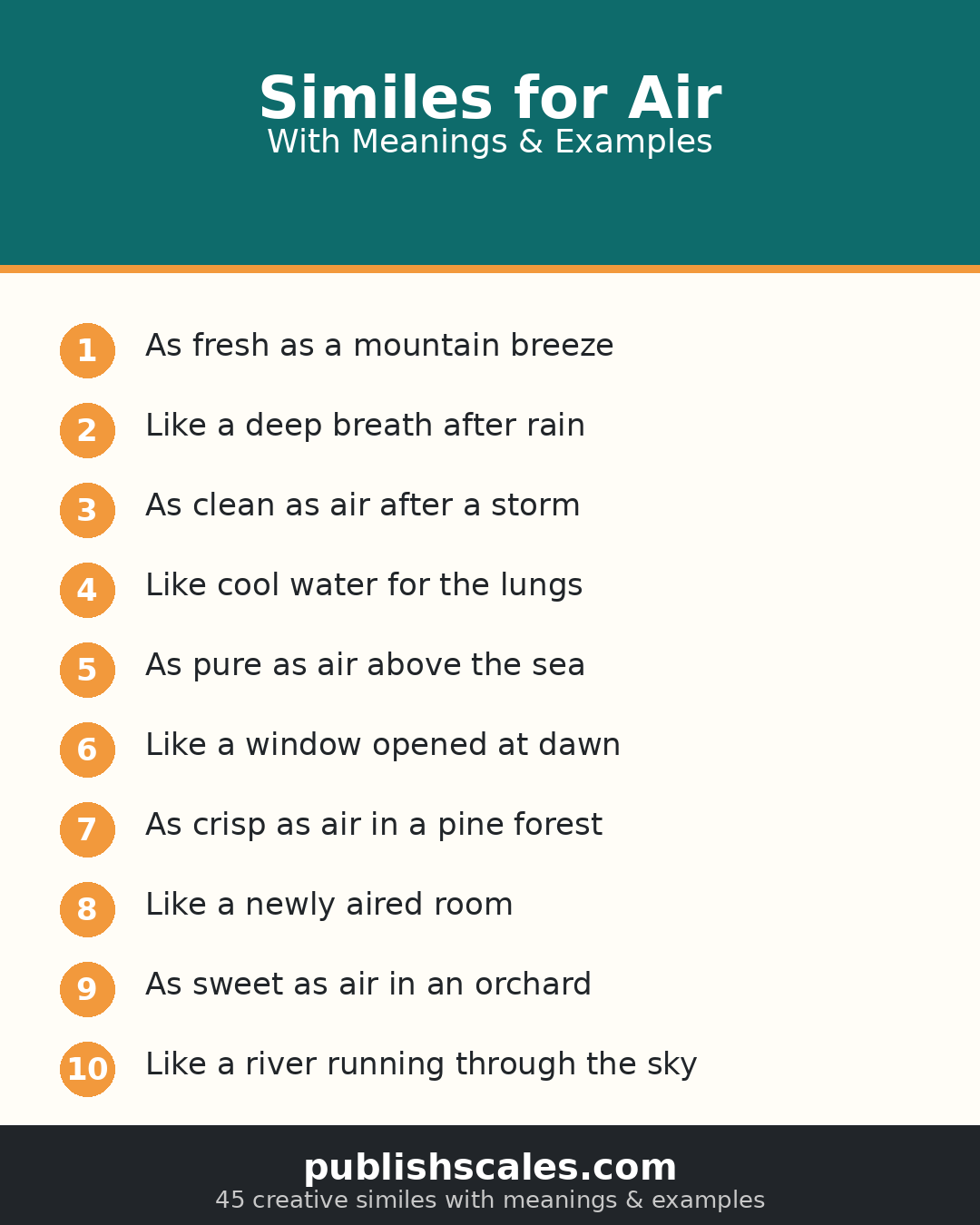
As fresh as a mountain breeze
Meaning: This image describes air that feels cool, clean, and full of energy. In addition, it suggests high places far from smoke and dust.
Example: After the long climb, the summit air felt as fresh as a mountain breeze.
Like a deep breath after rain
Meaning: This simile pictures air that smells washed and tastes almost sweet. As a result, it suits scenes of relief after trouble or heat.
Example: She stepped outside and inhaled, and the air felt like a deep breath after rain.
As clean as air after a storm
Meaning: This comparison describes air scrubbed clear by wind and falling rain. Meanwhile, it hints that earlier chaos has fully passed away.
Example: By morning, the valley air was as clean as air after a storm.
Like cool water for the lungs
Meaning: This image treats fresh air as a drink for a tired body. Therefore, it works well after sickness, travel, or stuffy rooms.
Example: The sea breeze reached the sickroom like cool water for the lungs.
As pure as air above the sea
Meaning: This simile describes air untouched by factories, traffic, or crowded streets. In fact, sailors often praise this clearness in their journals.
Example: Far from the harbour, the morning air was as pure as air above the sea.
Like a window opened at dawn
Meaning: This image captures the first rush of cool air into a room. Consequently, it suggests hope, waking up, and a fresh start.
Example: The news reached the quiet office like a window opened at dawn.
As crisp as air in a pine forest
Meaning: This comparison gives air a sharp, scented edge from resin and needles. Moreover, it suits walkers, campers, and clear winter mornings perfectly.
Example: The trail air stayed as crisp as air in a pine forest.
Like a newly aired room
Meaning: This simile describes indoor air that finally feels light and welcoming again. In short, stale stuffiness has gone, and comfort has returned.
Example: Grandmother opened every shutter, and the cottage felt like a newly aired room.
As sweet as air in an orchard
Meaning: This image fills the air with blossom, fruit, and gentle warmth. Similarly, it suits spring scenes, gardens, and young love stories.
Example: During blossom week, the village air was as sweet as air in an orchard.
Similes for Air and Wind in Motion
Moving air brings scenes to life and pushes the story forward quickly. Moreover, these images show wind as playful, wild, or kind.
Like a river running through the sky
Meaning: This image makes the wind flow steadily in one clear direction. In addition, it suits high passes, plains, and open rooftops.
Example: All afternoon, the wind poured over the ridge like a river running through the sky.
As restless as a flag in a gale
Meaning: This simile describes air that twists, snaps, and never settles down. Therefore, it fits storms, arguments, and nervous waiting scenes.
Example: The harbour air stayed as restless as a flag in a gale.
Like unseen hands combing the grass
Meaning: This image shows wind rippling through fields in long, smooth waves. In addition, it suits harvest scenes and quiet, watchful moments.
Example: The breeze crossed the meadow like unseen hands combing the grass.
As swift as a hawk on the wind
Meaning: This simile gives moving air speed, purpose, and a hunter’s grace. As a result, it suits chases, races, and urgent journeys.
Example: The message sped down the valley as swift as a hawk on the wind.
Like a whisper travelling through grass
Meaning: This image describes a soft breeze that seems to carry secrets. Consequently, it fits gardens, graveyards, and quiet evening walks.
Example: A small wind moved through the wheat like a whisper travelling through grass.
As playful as a breeze in the curtains
Meaning: This comparison makes light air feel cheerful, teasing, and almost alive. In fact, it suits childhood scenes and lazy summer rooms.
Example: The nursery air felt as playful as a breeze in the curtains.
Like a runner that never tires
Meaning: This simile describes wind that keeps going hour after hour. Moreover, it suits deserts, coasts, and long exposed roads.
Example: Across the plateau, the wind blew like a runner that never tires.
As wild as wind over the moor
Meaning: This image gives the air a rough, lonely, and untamed character. In contrast, sheltered valleys feel calm and safe beside it.
Example: On the high path, the air turned as wild as wind over the moor.
Like a giant breathing over the hills
Meaning: This comparison makes the wind rise and fall in slow gusts. Still, the image keeps the scene gentle rather than frightening.
Example: All night, gusts rolled over the farm like a giant breathing over the hills.

Similes for Air That Feels Light and Weightless
Light air images describe things that barely seem to touch the ground. Therefore, these similes for air suit feathers, bubbles, and balloons.
As light as a feather on the breeze
Meaning: This simile describes something carried easily, with almost no weight at all. In addition, it suits dancers, leaves, and gentle summer air.
Example: The kite rose at once, as light as a feather on the breeze.
Like a bubble floating upward
Meaning: This image shows slow, shining movement through still and quiet air. As a result, it fits children, baths, and dreamy afternoons.
Example: Her laughter lifted through the hall like a bubble floating upward.
As weightless as a dandelion seed
Meaning: This comparison describes a thing the smallest breeze can carry away. Meanwhile, it hints at wishes, childhood, and letting go.
Example: The thistledown drifted past as weightless as a dandelion seed.
Like a kite dancing on a string
Meaning: This image mixes lightness with joyful, tugging movement against the wind. Consequently, it suits festivals, beaches, and bright spring holidays.
Example: High above the fair, the banner fluttered like a kite dancing on a string.
As soft as breath on a mirror
Meaning: This simile describes air so gentle that it barely moves anything. In short, it suits sleeping children, libraries, and tender moments.
Example: The evening air in the sickroom felt as soft as breath on a mirror.
Like a balloon slipping from a hand
Meaning: This image shows something rising away slowly, beyond anyone’s reach. Therefore, it can suggest lost chances or carefree summer days.
Example: His chance drifted away like a balloon slipping from a hand.
As gentle as a sigh
Meaning: This comparison gives the air a soft, emotional, and human quality. Moreover, it suits relief, contentment, and quiet goodbyes in stories.
Example: After the rain, the breeze came as gentle as a sigh.
Like dust motes drifting in sunlight
Meaning: This image makes tiny particles float slowly inside a still room. In fact, it suits attics, barns, and lazy afternoon scenes.
Example: Inside the old barn, the air shimmered like dust motes drifting in sunlight.
As free as a bird on the wind
Meaning: This simile joins lightness with freedom and happy, open movement. Above all, it suits escapes, releases, and joyful new beginnings.
Example: She ran down the hill, feeling as free as a bird on the wind.
Similes for Cold Air and Hot Air in Weather
Temperature changes how air feels against the skin within seconds. In contrast, these similes for air cover frost, heat, and stormy stillness.
As sharp as a blade of frost
Meaning: This image describes cold air that seems to cut exposed skin. In addition, it suits mountain dawns and harsh winter journeys.
Example: The dawn air on the pass felt as sharp as a blade of frost.
Like a slap of winter wind
Meaning: This simile makes cold air strike suddenly and wake the whole body. As a result, it fits doorways, stations, and exposed street corners.
Example: Outside the station, the cold hit him like a slap of winter wind.
As hot as breath from an oven
Meaning: This comparison describes air that rolls out in a dry, heavy wave. Meanwhile, it suits bakeries, deserts, and midsummer city streets.
Example: The afternoon gust arrived as hot as breath from an oven.
Like a blanket of warm air
Meaning: This image makes heat feel close, soft, and hard to escape. Consequently, it suits tropical nights and crowded, still rooms.
Example: The valley lay under heat like a blanket of warm air.
As biting as wind off the snow
Meaning: This simile gives cold air teeth that nip ears and fingers. Therefore, it suits sledging scenes, rescues, and winter battles.
Example: The ridge wind stayed as biting as wind off the snow.
As dry as desert air at noon
Meaning: This comparison describes air that pulls moisture from lips and throat. In fact, travellers often remember this dryness most of all.
Example: By midday, the canyon air was as dry as desert air at noon.
Like a furnace door opening
Meaning: This image makes a sudden blast of heat feel industrial and fierce. Moreover, it suits foundries, wildfires, and heatwave afternoons in cities.
Example: Heat rolled from the warehouse doors like a furnace door opening.
As chilly as air in a deep cave
Meaning: This simile describes cool air that stays untouched by the sun. In short, it suits cellars, tunnels, and shaded rocky places.
Example: Even in August, the gorge air felt as chilly as air in a deep cave.
Like a sheet of heat over the road
Meaning: This image shows hot air shimmering and bending the light above tarmac. Similarly, it suits highways, rooftops, and long summer journeys.
Example: The motorway shimmered under air like a sheet of heat over the road.
Similes for Air in Nature and Open Spaces
Open country gives air room to stretch, gather scent, and change slowly. Finally, these images suit fields, coasts, forests, and high places.
Like a sky without walls
Meaning: This image describes open air that seems to stretch without limits. In addition, it suits steppes, oceans, and wide flat farmland.
Example: Above the plain, the air spread out like a sky without walls.
As open as air above the plains
Meaning: This simile stresses space, honesty, and freedom from narrow streets. As a result, it fits journeys, migrations, and hopeful departures.
Example: After the city, the plateau felt as open as air above the plains.
Like the breath of the whole valley
Meaning: This comparison makes gentle air feel alive and shared by everything. Meanwhile, it suits farming villages and green river country.
Example: The evening breeze moved through the fields like the breath of the whole valley.
As calm as air at dawn over a lake
Meaning: This image describes still air resting quietly above smooth water. Consequently, it suits fishing scenes, retreats, and peaceful early mornings.
Example: The campsite woke to air as calm as air at dawn over a lake.
As still as air between the mountains
Meaning: This simile describes air protected from every wind by high slopes. Therefore, it suits hidden valleys, shrines, and secret gardens.
Example: The hidden glen stayed as still as air between the mountains.
Like an ocean overhead
Meaning: This comparison reminds readers that air surrounds us like water surrounds fish. In fact, scientists describe the atmosphere in exactly this way.
Example: Above the town, the clear air pressed down like an ocean overhead.
As full of life as spring air
Meaning: This image fills the air with birdsong, pollen, and growing energy. Moreover, it suits gardens, orchards, and hopeful village scenes.
Example: The April morning felt as full of life as spring air.
Like a garden breathing after rain
Meaning: This simile makes cool air smell of wet earth and leaves. In short, it suits evenings after storms and quiet countryside.
Example: The lane beyond the gate smelled like a garden breathing after rain.
As endless as air above the sea
Meaning: This comparison gives open air a vast, timeless, and lonely quality. Above all, it suits sailors, migrants, and long sea voyages.
Example: From the deck, the horizon air looked as endless as air above the sea.
Quick Comparison Table
The table below matches nine favourite similes to their best uses. Therefore, you can pick the right image for your scene quickly.
| Simile | Best For | Tone |
|---|---|---|
| As fresh as a mountain breeze | New beginnings | Hopeful |
| Like cool water for the lungs | Recovery scenes | Soothing |
| Like a river running through the sky | Steady wind | Powerful |
| As playful as a breeze in the curtains | Childhood scenes | Cheerful |
| As light as a feather on the breeze | Gentle movement | Delicate |
| Like a bubble floating upward | Dreamy moments | Whimsical |
| As sharp as a blade of frost | Winter mornings | Harsh |
| As hot as breath from an oven | Heatwaves | Oppressive |
| As calm as air at dawn over a lake | Peaceful settings | Serene |

How to Use Air Similes in Writing
Choosing a simile is only the first step in describing air. Used well, similes for air can carry weather, mood, and movement together.
Match the Air to the Mood
Decide first whether your scene needs calm, energy, or threat. Then choose an image that already carries that same feeling. For example, a feather suits peace, while a furnace suits danger. As a result, readers feel the mood before anything happens.
Show Movement with Strong Verbs
Air feels real when it pushes, lifts, or brushes against things. Therefore, pair your simile with curtains, grass, hair, or loose papers. In addition, one moving detail often beats three still ones. Consequently, the whole scene starts breathing on the page.
Use Temperature to Set the Season
Readers recognise seasons through skin faster than through calendars. A blade of frost says winter without any date at all. Meanwhile, a sheet of heat places the scene in high summer. In short, temperature similes quietly anchor your setting in time.
Give Each Scene One Main Image
One strong picture stays in the reader’s mind far longer. However, three competing images cancel each other out quickly. Instead, pick the clearest simile and let it finish its work. Above all, trust a single image to carry the moment.
Borrow Images from the Setting
Local details make air similes feel true to their place. Coastal writers can use sea air, gulls, and salt spray. Similarly, mountain writers can use thin air, frost, and high wind. In fact, familiar details convince readers faster than grand claims.
Common Mistakes to Avoid with Air Similes
Describing Air Without Any Senses
Air has no colour, so weak writers simply call it invisible. However, readers can still feel temperature, movement, scent, and sound. Therefore, anchor every air simile in at least one real sense. As a result, the invisible element becomes easy to picture.
Mixing Hot and Cold Images
A frost blade and an oven blast cannot describe one moment. Such clashes confuse readers about the season and the weather. Instead, check every image against the scene’s actual temperature first. Consequently, your setting stays believable from start to finish.
Overusing the Word Fresh
Fresh air appears in almost every beginner draft about the outdoors. However, repetition drains the phrase until readers stop noticing it. Vary your images with orchards, rain, mountains, and sea spray instead. Moreover, specific details always beat familiar, tired labels.
Making Air Do Everything at Once
One simile cannot carry mood, weather, smell, and plot together. The sentence collapses when each image pulls a different way. In short, give each simile one clear job per scene. Then let the next sentence handle the next effect.
Forgetting That Still Air Matters
Many writers describe wind but ignore calm, heavy, waiting air. Still air, however, can build suspense before storms or arguments. In addition, stillness makes the next gust feel far stronger. Therefore, describe the quiet air as carefully as the storm.

Frequently Asked Questions
What is a simile for air?
A simile compares air with something familiar using like or as. For example, a breeze might feel like a whisper through grass. Such comparisons help readers picture an element they cannot see. In short, good similes for air make the invisible feel real.
How do I describe fresh air in writing?
Start with the senses: coolness, scent, and the feeling on skin. Then add a comparison, such as mountain air or orchard air. In addition, show a character breathing deeply or opening a window. As a result, freshness becomes an action, not just a label.
Which similes suit wind in a storm scene?
Choose images with force, speed, and a touch of danger. A gale can feel like a runner or a wild moor wind. Meanwhile, flying objects and bending trees prove the wind’s strength. Therefore, let damage and noise support your chosen simile.
Can air similes work in poems?
Yes, air similes suit poems especially well because air suggests freedom. Poets often compare air to breath, rivers, or open skies. Moreover, one light image can carry a whole short poem. Above all, keep the image simple and musical in poems.
What is the difference between air and wind similes?
Air similes describe the element itself, including stillness and freshness. Wind similes focus on air that moves, pushes, or howls. In contrast, calm scenes need air images, while journeys need wind. Consequently, choose by movement first, then by temperature and mood.
How many air similes should a scene contain?
One strong simile usually serves a single scene very well. However, a long descriptive passage can repeat that image later. Still, new images should enter only when the weather changes. Finally, restraint keeps similes for air fresh in every scene.
Final Thought
Air surrounds every scene, yet readers notice it only when writers help. One honest comparison can make a whole landscape breathe. Choose images that match your weather, your season, and your mood. When similes for air work well, even stillness feels alive on the page.
Air changes with the season, so it pairs well with weather writing. For warm days see similes for summer days, and for cold ones try similes for snow falling.>
The PublishScales Editorial Team researches and writes clear, original guides to similes and figurative language.